
Ever wondered what you’ll eat and where you’ll sleep on the Manaslu Circuit Trek?
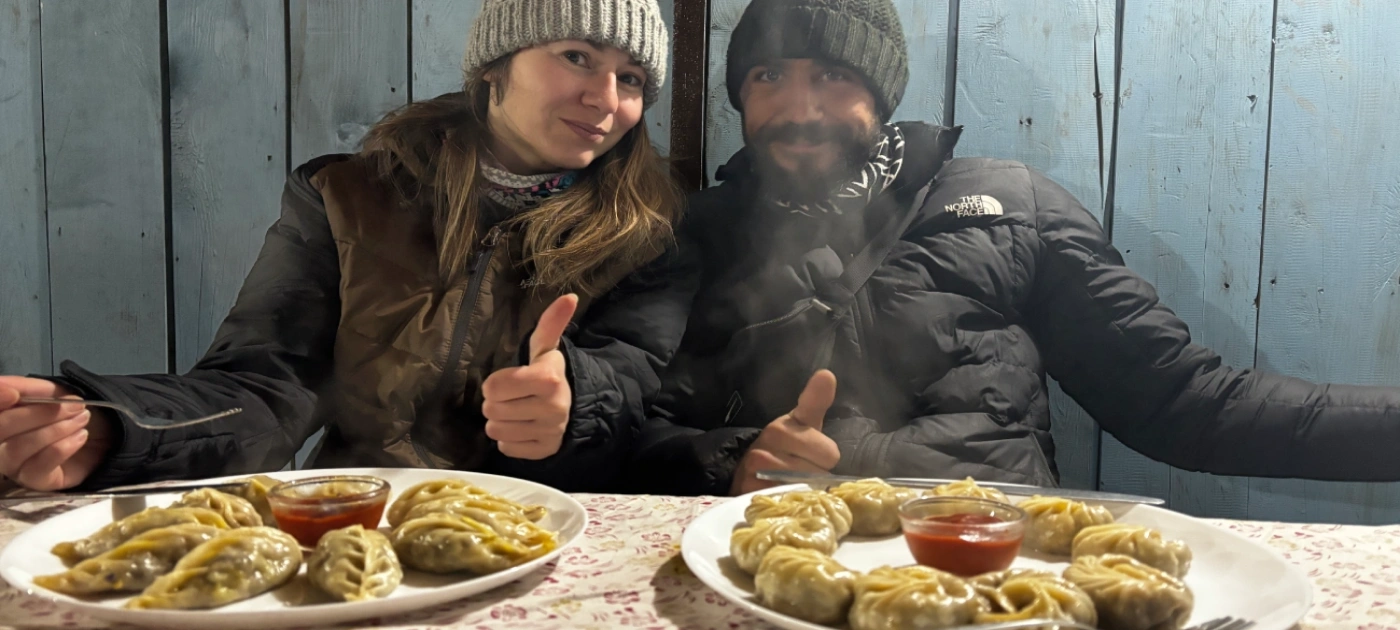
Manaslu Circuit Trek Food & Accommodation Guide -Teahouses, Costs & Tips

This is one of the top curiosities that our trekkers are concerned about.
But Manaslu is not a difficult journey. Though it is a remote trek that will take you to an unexplored region in Nepal, you will get to stay in small, family-run teahouses. This experience is different but very exciting. You will enjoy the simple but delicious meals every day.
The rooms and food are basic but cozy enough to keep you warm and strong while you walk through the big mountains at Manaslu Circuit Trek.
You will notice that the rooms and menus change as you climb higher. Lower villages like Machha Khola and Jagat offer more room choices and bigger menus. On the other hand, Samagaun and Samdo offer fewer room choices.
Likewise, Dharmasala, which is also called Larkya Phedi, is the most basic stop before you cross Larkya La Pass.
You will see the prices rise, and comfort, food choices, hot showers, and Wi-Fi all get less certain the higher you go in altitude.
But do you know what the good news is?
Well, you do not need a tent or cooking gear on a normal teahouse trek.
You can simply pack a warm sleeping bag, a way to treat water, your toiletries, and some snacks, and then you can hope for a successful journey on this trek.
If you want to see the full route, permits, and day-by-day plan, you can read our complete guide to trekking around Manaslu Circuit.
Manaslu Circuit Food and Accommodation at a Glance
Note: The prices can change between lodges, seasons, and villages. We have given these numbers as a rough plan, and these are not a fixed price list.
The costs get higher in the upper, more remote part of the Manaslu route.
What is teahouse accommodation like on the Manaslu Circuit?
Manaslu teahouses are simple places to sleep and eat. They are not fancy like big hotels in the city like Kathmandu and Pokhara. You will get a clean room with a bed and blankets. The people who run them are very kind, but the rooms it is very basic but cozy.
A normal room in the Manaslu region has:
- Two single beds
- Foam mattresses
- Pillows
- Blankets
- A small table
- Basic lighting
You will find twin-sharing rooms are very common. This is especially true higher up the trail. Larger villages may offer a private room, but don't count on one at every stop.
To be honest, comfort drops as you climb and move farther from the road.
Twin-Sharing vs. Private Rooms
A twin-sharing room you find means two trekkers share one room. Each can sleep in a separate bed. You will find private rooms that are more available in lower, larger villages. Fewer private rooms exist as you climb upwards.
Note: If you trek in the busy spring or autumn months, you have to book your rooms early, especially for the upper part of the route.
Is the Manaslu Circuit Trek a Teahouse Trek?
Yes. Most trekkers on the Manaslu Circuit stay in teahouses. A teahouse is a small mountain lodge. It gives you a room, a bed, meals, and a shared bathroom.
Some lodges also offer hot showers, Wi-Fi, and charging for a small fee. You need to contact the lodge or the teahouse owner to know about the charges.
This simply means you do not need to carry:
- A tent
- A sleeping mat
- Cooking equipment
- Fuel
- Large amounts of food
Note: You walk from village to village and stay in local lodges each night.
You eat local food, meet lodge owners, and get to see the daily life in the mountains, which sets Manaslu apart from a fully camped trek.
Where do you stay along the Manaslu Circuit?
You will notice your comfort changes a lot along the trail. As you go higher, availability goes on decreasing. We have given you what to expect village by village on the Manaslu Circuit Trek :
| Overnight Stop | Approx.Altitude | Accommodation |
| Machha Khola | 900 m | Basic, fairly comfortable |
| Jagat | 1,340 m | Basic Teahouses |
| Deng | 1,800 m | Simple Rooms |
| Namrung | 2, 630 m | More Comfortable |
| Lho | 3,180 m | Comfortable Lodges |
| Shyala | 3,500 m | Basic to Comfortable |
| Samagaon | 3,530 m | Good Options |
| Samdo | 3,860 m | Basic |
| Dharmashala | 4,460 m | Little food, few facilities |
| Bhimtang | 3,720 m | Comfortable again |
Facilities differ between lodges even in the same village. However, the pattern stays clear across the route: simple rooms lower down, and more basic rooms as you climb.
Accommodation in Machha Khola, Jagat, and Deng
The lower part of the trail gives you the most options. Machha Khola has basic teahouses with rooms, dining halls, and shared bathrooms. Some lodges include hot showers and Wi-Fi as well.
Jagat also feels fairly comfortable compared to the upper trail. By Deng, the trail gets quieter and more remote. You will find rooms very simple, and extras thin out.
This is where you first notice the pattern: the higher you walk, the pricier supplies get, and the fewer choices you have.
Accommodation in Namrung, Lho, and Shyala
Namrung, Lho, and Shyala are located before Samagaun. It often feels more comfortable than the lower gorge.
Some lodges here have better bathrooms, hot showers, Wi-Fi, and charging. You will find a good food range with Dal Bhat, noodles, pasta, momo, soup, and eggs. Don't expect every lodge to match the same accommodations, though. One teahouse might have Wi-Fi while the lodge next door does not.
Samagaun Accommodation
Samagaun, also called Sama Gaun, is one of the major villages on the route. Many trekkers rest here an extra day to adjust to the altitude, so you will find several teahouse options.
Rooms here are more comfortable than in Samdo or Dharamshala.
You can expect simple twin rooms, dining halls, shared bathrooms, hot showers, Wi-Fi, and charging at some lodges. Samagaun often gives you a wider food choice than the villages above it.
Samdo Accommodation
Samdo is situated at about 3,800 meters. This destination is close to the Tibet border area. Rooms here get noticeably more basic. Supplies are harder to bring in, so choices shrink. However, you can expect:
- Simple twin-sharing rooms
- Basic mattresses and blankets
- Shared bathrooms
- Limited hot water
- Weak or no Wi-Fi
- Paid charging where you can find it
- A smaller food menu
Note: Don't expect hotel-style comfort in Samdo. The lodges give you a warm meal and a safe bed before you climb higher.
Dharmasala Accommodation: What Should You Expect?
Dharmasala, or Larkya Phedi, is situated at roughly 4,460 meters. It's the last stop before you cross Larkya La Pass. This is the most basic overnight stay on the whole route.
You may find:
- Shared rooms
- Dorm-style sleeping
- Basic mattresses and blankets
- Shared toilets
- Very little washing water
- Little to no Wi-Fi
- No reliable hot shower
Why Is Dharmasala So Basic?
The lodge owners are very hospitable. The problem that lies is logistics.
Above the height of 4,400 meters, it costs far more to bring in food, gas, fuel, building supplies, water, and bedding. Since everything must travel a long way on foot or by mule, the effort it takes is difficult.
The lodge exists so trekkers have a place to rest peacefully before the early climb over Larkya La. You can think of Dharmasala as a stop built for one job: getting you ready for the pass, not for a comfortable stay.
What food is available on the Manaslu Circuit Trek?
The Manaslu trek menu mixes Nepali, Tibetan, and simple Western dishes. You will find most of the common meals at Manaslu. It includes:
- Dal Bhat
- Fried rice
- Chowmein
- Thukpa
- Momo
- Pasta
- Soup
- Potatoes
- Tibetan bread
- Pancakes
- Porridge
- Eggs
- Toast
- Chapati
- Vegetable curry
Note: Food choices stay wider at low altitude and shrink as you climb, since fuel and ingredients must travel farther into the mountains. Dharmasala offers the smallest menu on the trail.
Dal Bhat on Manaslu Circuit Trek
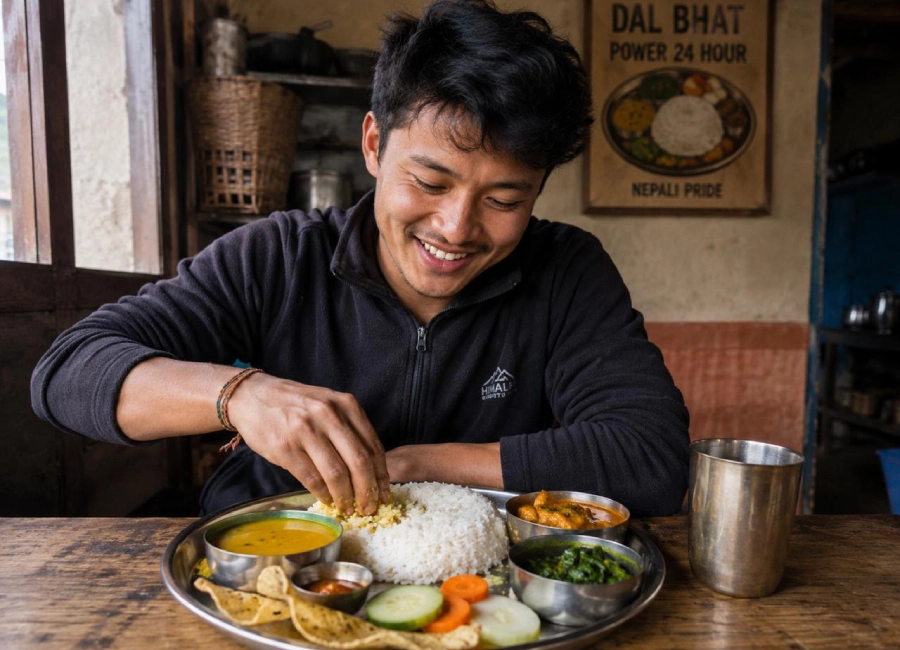
Dal Bhat is the meal you will eat the most on this Manaslu trek.
A plate usually includes rice, lentil soup, vegetable curry, and pickles, sometimes with extra vegetables on the side.
Trekkers order it often because it fills you up. This meal is a source of good carbs for long walking days. You can find it almost everywhere on the route. Expect to pay roughly NPR 500-1,200 for Dal Bhat, with higher prices at higher altitude.
Is Dal Bhat good for trekking?
Yes, definitely!
Dal Bhat gives you carbs from rice, protein from lentils, and extra nutrients from vegetables. If your stomach handles it well, eat it as much as you want.
Manaslu Trek Breakfast
You will usually eat breakfast early, before the day's walk starts.
The most common choices include:
- Porridge
- Muesli
- Eggs
- Omelet
- Tibetan bread
- Pancakes
- Toast
- Chapati
- Tea
- Coffee
At high altitude, pick food that makes your stomach feel good and relieves.
A carb-heavy breakfast helps more on a long day than food you pick because it sounds new. The breakfast you find costs roughly NPR 400-900, with prices rising as you climb.
Manaslu Trek Lunch
You usually eat lunch at a teahouse along the trail, not back at your overnight lodge. Depending on the village, you may find Dal Bhat, fried rice, chowmein, thukpa, momo, pasta, potatoes, soup, or vegetable dishes.
Your guide picks a good lunch stop based on the day's route.
Manaslu Trek Dinner
You eat dinner at your overnight teahouse.
The common food choices include Dal Bhat, noodles, fried rice, momo, thukpa, pasta, soup, potatoes, and vegetable curry.
At high altitude, don't be surprised if you see a short menu.
In Dharmasala, some lodges may only serve Dal Bhat, noodles, and soup.
Note: Ask for the menus for more accurate food options.
What to eat at High Altitude on Manaslu?
The best food up high isn't the priciest item on the menu. You need to pick food that is:
- Warm
- Freshly cooked
- Familiar
- Easy to digest
- High in carbs and calories
Good picks include:
- Dal Bhat, which fills you up and stays reliable.
- Potatoes, which are an easy carb source.
- Porridge is good for breakfast.
- Tibetan bread is quite filling and easy to find.
- Noodles or thukpa are warm and simple.
- Vegetable soup is often light and warm when you need it.
What foods should you limit?
No single food is off-limits for every trekker, but you have to stay careful with food that is:
- Hard for you to digest
- Very greasy
- Not freshly cooked
- Raw, with hygiene you can't check
- Very spicy, if you're not used to spice
Note: Make sure you go easy on alcohol at altitude too. It usually dehydrates your body and can make it harder for your body to adjust.
Vegetarian food on Manaslu Trek
You will find vegetarian food options on almost every menu.
Some of the common choices include vegetable Dal Bhat, vegetable momo, vegetable noodles, fried rice, potato curry, vegetable soup, Tibetan bread, pancakes, porridge, and pasta.
If you are a vegetarian, you must tell your guide and the lodge staff clearly. They will make the necessary arrangements for you.
Note: Be careful! If you have food allergies or need to avoid certain foods, inform them before you order.
Don't assume every lodge can offer a special option on short notice. Be smart to avoid food problems.
What About Meat on the Manaslu Circuit?
Meat shows up on some menus, but you'll find less of it as you climb. The real problem here is freshness and storage, not the meat itself.
At high altitude, many trekkers choose fresh vegetarian meals. This is because they are easy to digest and simple to trust. If you order meat, check that it's fully cooked and served hot.
Drinking Water on the Manaslu Circuit Trek
Safe drinking water is unavoidable on the Manaslu Circuit Trek. You have a few ways to get safe water on the trail. The options are :
- Boiled water
- Filtered water
- Purified water
- Bottled water
- Water treated with purification tablets
Note: Don't drink water straight from a stream or tap, even if it looks clean and fresh.
Boiled Water vs. Bottled Water on Manaslu
| Water Option | Good Side | Down Side |
| Boiled water | Practical, less plastic, less waste | Costs extra |
| Boiled water | Easy and sealed | Pricey up high, adds plastic waste |
| Filtered water | Good for the long run | Needs a working filter |
| Purification Tablets | Light to carry as backup | Can change the taste of water |
- Boiled water costs normally NPR 60-100 per liter in some spots.
- Bottled water can reach NPR 200-300 per liter higher up. Prices shift by lodge and location.
Note: Bring a reusable bottle and a solid way to treat water. It saves money and cuts down on plastic waste over a multi-day trek.
How much water should you carry?
The amount of water is not specific. You have to carry enough for several liters, especially on longer or higher days.
A solid setup includes:
- A reusable water bottle
- A hydration bladder, if you like one
- Purification tablets or drops
- A filter as a backup
Note: Ask your guide each morning about water access for that day's walk.
Hot Shower and Wi-Fi on the Manaslu Trek
Are Hot Showers Available?
Yes, but they usually cost extra and get harder to find as you climb. Expect to pay roughly NPR 300-800, depending on the lodge. Don't count on a hot shower in Dharmasala.
Is Wi-Fi Available?
Wi-Fi shows up at some teahouses, but not all of them. You'll find it more often in bigger villages like Samagaun and in the lower part of the trail.
Higher up, connections tend to be slow, weak, pricey, or missing. Plan for spotty Wi-Fi in the upper section.
What about charging?
Many teahouses offer charging for a small fee. Bring a power bank because:
- Lodge power can run low
- Charging points get shared
- Outlets may already be in use
- Some high lodges have limited power
Charging fees usually run about NPR 100-600, depending on the lodge.
Manaslu Circuit Trek Food and Accommodation Cost
Your total cost depends on altitude, season, the lodge you pick, your menu choices, and whether your trek package already covers meals.
Accommodation Cost
- Lower villages: roughly NPR 500-1,000
- Mid-altitude villages: roughly
- NPR 800-1,500
- Samdo and Dharmasala: roughly NPR 1,000-2,000
Food Cost
- Breakfast: NPR 400-900
- Lunch: NPR 500-1,000+
- Dinner: NPR 600-1,200+
- Dal Bhat: NPR 500-1,200
- Hot drinks: NPR 80-200+
- Bottled water: NPR 100-300+ per liter
Prices climb in the high villages because it costs more to bring in food, fuel, and other supplies.
Sample Daily Food and Accommodation Budget
If you pay for meals and rooms on your own instead of using a full-board package, plan for something close to this:
Lower/mid section
- Room: NPR 500-1,000
- Breakfast: NPR 400-600
- Lunch: NPR 500-800
- Dinner: NPR 600-800
- Daily total: roughly NPR 2,000-3,200
Upper section
- Room: NPR 1,000-2,000
- Breakfast: NPR 600-900
- Lunch: NPR 700-1,000
- Dinner: NPR 800-1,200
- Daily total: roughly NPR 3,100-5,100
Set aside extra cash for water, tea, coffee, snacks, hot showers, Wi-Fi, and charging.
For the full breakdown of permits, guide, and porter fees, you can check our complete Manaslu Circuit Trek cost guide.
What is usually included in a Manaslu Trek Package?
If you book a guided package, check what's covered before you sign up. Many full-board packages include teahouse rooms, breakfast, lunch, dinner, a guide, permits, and transport. Extras often stay outside the price, such as:
- Alcohol
- Bottled drinks
- Snacks
- Hot showers
- Wi-Fi
- Charging
- Laundry
- Personal spending
- Tips
Compare packages by what's included, not just by the number on the front page.
Sleeping Bag Recommendation for Manaslu Trek
Pack a sleeping bag for the Manaslu Circuit. Teahouses give you blankets, but blankets alone may not keep you warm enough, especially in rooms with no heating.
A sleeping bag adds a layer of warmth and keeps things cleaner for you.
What sleeping bag should you take? For spring and autumn, pack a warm trekking bag built for temperatures well below freezing at high altitude. For winter, bring a much warmer bag.
Don't judge a bag only by its "extreme" rating on the label. Look at the comfort rating instead. Your guide or trekking company can point you to a rating that fits your season and route.
A sleeping bag liner also helps. It adds warmth and keeps your bag cleaner over the trip.
What is the dining room like at Manaslu Base Camp?
The dining room works as the social heart of the teahouse.
After a day of walking, trekkers gather in the dining room to eat dinner, drink tea, charge their phones, talk with other trekkers, dry wet clothes, and warm up by the stove.
At many high lodges, the dining room stays warmer than the bedrooms. It becomes a big part of your evening, not just a place to eat.
Food and Accommodation During Different Seasons at Manaslu
Spring (March to May):
A busy time on the trail, with more trekkers, higher demand for rooms, and good food choices. Book rooms early for popular stops.
Autumn (September to November):
Another busy season with good weather. Teahouses fill up fast, so groups should book ahead.
Monsoon (June to August):
Rain and humidity make the lower trail harder to walk. Fewer trekkers mean quieter lodges, though weather can slow food and supply deliveries at times.
Winter (December to February): The hardest season for comfort. Nights drop well below freezing, and some high-altitude services close. A warm sleeping bag and solid cold-weather gear matter even more now.
To pick the best month for clear weather and open teahouses, you can check our guide on the best time for the Manaslu Circuit Trek.
What Should You Pack for Food and Accommodation?
You don't need a full kitchen, but a few items make the trek easier:
- Reusable water bottle
- Purification tablets or filter
- Sleeping bag
- Sleeping bag liner
- Power bank
- Headlamp
- Toilet paper
- Hand sanitizer
- Wet wipes
- Basic toiletries
- Energy bars
- Nuts
- Dried fruit
- Chocolate
Why Carry Snacks?
Snacks help most on long days.
You need to keep some in your daypack for the Larkya La crossing, which takes you through long gaps between villages, delayed meals, and extra energy on tough climbs.
Bring your own snacks for the Dharmasala-to-Bimthang crossing especially. Make sure you don't expect food service along the pass itself.
8 Practical Food and Accommodation Tips
Eat where you sleep.
Room prices stay low because lodges expect you to eat dinner and breakfast there too.
Don't expect the same comfort each night.
A room in Machha Khola and a room in Dharmasala are two different worlds.
Carry your own sleeping bag.
Blankets help, but if you have a personal bag along with you, it keeps you far warmer on cold nights.
Don't count on Wi-Fi.
Make sure you download offline maps, key documents, and trek notes before you leave Kathmandu.
Carry a power bank.
Don't let a dead phone become a problem just because the lodge charging spot is taken. It is better if you carry your own power bank.
Pick freshly cooked food.
At high altitude, make sure you choose meals that are made fresh and served hot.
Keep cash on hand.
Bring extra cash for water, snacks, showers, Wi-Fi, charging, and drinks.
Ask your guide about the next lodge. Guides usually know which teahouses are open and what they offer next, which matters most in the upper Manaslu region.
Bathrooms and Toilet Facilities on the Manaslu Circuit
Bathrooms on the Manaslu Circuit are almost always shared. You will find both styles, but the level of comfort changes noticeably as you gain altitude.
In the lower villages such as Machha Khola, Jagat, and Deng, you will find a mix of Western-style sit-down toilets and traditional squat toilets. A few lodges even offer attached bathrooms for a higher room rate. Likewise, running water is usually available.
As you move into the mid-altitude villages of Lho, Shyala, and Samagaun, shared bathrooms become the standard.
Squat-style toilets are more common here. Flush systems often work only intermittently. Water is frequently stored in buckets rather than coming from a continuous supply.
Higher still, in Samdo and especially at Dharmasala, facilities grow very basic. You can expect simple shared or outdoor squat toilets with limited or frozen running water in the early morning, and little to no hot water for washing.
Because of these conditions, most experienced Himalayan trekkers carry their own toilet paper, wet wipes, and hand sanitizer, etc. Many prefer squat toilets in shared settings purely for hygiene reasons.
Alcohol and Soft Drinks on the Manaslu Circuit
Beer, soft drinks, and local spirits such as raksi are available in most teahouses, especially in the lower and mid sections of the trail.
While these options can feel tempting after a long day of walking, alcohol is strongly not recommended once you reach higher altitudes.
Note: It dehydrates the body, reduces sleep quality, and makes acclimatization more difficult. All of which increase the risk of altitude sickness.
For these reasons, most experienced trekkers either avoid alcohol completely until after crossing Larkya La or save a small celebration for the final night in Bimthang or Tilije.
Soft drinks remain acceptable in moderation, but they become expensive higher up. Remember, they are never a substitute for proper hydration with boiled or treated water.
Electricity and Device Charging on the Manaslu Circuit
Electricity is available in most villages along the Manaslu Circuit, but its reliability declines with altitude.
In the lower and mid villages up to Samagaun, many lodges are connected to small micro-hydropower systems. Charging phones and cameras is usually possible in the dining hall, sometimes free. But often you are charged a modest fee of a few hundred rupees.
Higher up, in Samdo and Bimthang, power shifts mainly to solar panels.
Charging still exists but costs more. It is often limited to daylight hours or the common dining area. At Dharmasala the situation is more restricted still.
Electricity is usually available only in the main dining room and is frequently solar-powered, so you cannot completely rely upon.
Note: A high-capacity power bank of at least 20,000 mAh is essential because lodge power can be shared among many trekkers. This can be interrupted by weather or simply unavailable
Carrying a power bank removes the stress of a dead phone or camera when you need it most.
Camping versus Teahouse Trekking on the Manaslu Circuit
Camping remains possible on the Manaslu Circuit, yet it is no longer the standard way to complete the trek.
Until a few years ago, the route was primarily a camping itinerary, but a full network of teahouses now exists in every major village, and the great majority of trekkers choose this option.
Camping requires tents, sleeping mats, cooking equipment, fuel, and extra porters to carry the gear, which raises both cost and logistical complexity.
In contrast, teahouse trekking eliminates the need to carry shelter or cooking equipment, provides hot meals every day, offers a warm dining hall in the evening, and keeps the overall logistics far simpler.
Unless you specifically seek a pure wilderness camping experience, the teahouse style is the easier, more comfortable, and more practical choice for most people walking the Manaslu Circuit.
Conclusion
Food and rooms on the Manaslu Circuit Trek stay basic and very local. It is full of small comforts you'll remember.
Most nights, you'll sleep in a family-run teahouse. You will get to stay in a twin-sharing room and eat meals like Dal Bhat, noodles, momo, and many more.
Altitude drives the biggest changes. Lower villages give you more food choices and better rooms. Namrung, Lho, and Samagaun offer a good balance of comfort and mountain views. Samdo turns simpler, and Dharmasala stays basic on purpose, since its height and remote spot limit what lodges can offer.
You need to pack for the trek, not for luxury. Carry some extra cash for hot showers, Wi-Fi, charging, and drinks. The teahouse stay is part of the Manaslu trip, not a problem to work around.
A simple room, a warm dining hall, a plate of Dal Bhat, and an evening chat with fellow trekkers make up some of the best parts of walking through the Himalayas.
Frequently Asked Questions
Is food expensive on the Manaslu Circuit Trek?
Yes, food gets expensive as you climb higher. The lodge owners must take the supplies farther to reach Samdo and Dharmasala. You should plan for roughly NPR 2,500-4,500 per day for food.
Is Dal Bhat available throughout the Manaslu Circuit?
Yes. You will find Dal Bhat available across most of the route. It is a dependable choice because of its availability. The menus shrink as you go up to higher altitudes.
Is vegetarian food available on the Manaslu trek?
Yes, you will find many vegetable options. The options include Dal Bhat, vegetable noodles, fried rice, momo, potatoes, soup, and Tibetan bread. show up on menus across the trail.
What is the best food to eat at high altitude on Manaslu?
Trekkers need to pick warm, carb-rich, easy-to-digest food such as Dal Bhat, potatoes, porridge, Tibetan bread, noodles, and soup. They are very filling and give energy for walking.
Can I get bottled water on the Manaslu Circuit?
Yes, you can get bottled water, but the price gets higher as you go up with altitude. Boiled or properly treated water works as a more practical choice for the Manaslu Circuit.
Is boiled water safe on the Manaslu Circuit?
Boiled water from a trusted teahouse works well for most trekkers. You can add a filter or purification tablets as backup if you're unsure about the source.
Is Wi-Fi available on the Manaslu Circuit?
Wi-Fi is available up at some teahouses, mostly in bigger villages. It gets weaker at high altitude, so don't count on it.
Can I take a hot shower on the Manaslu Circuit?
Yes, many teahouses offer a hot shower for a small amount of fee fee, though hot showers get harder to find as you climb, especially around Dharmasala.
What is Dharmasala accommodation like?
Dharmasala offers the most basic stay on the trek. You will find a shared sleeping space, simple bathrooms, and very few extras as accommodation.
Do I need a sleeping bag for the Manaslu Circuit?
Yes, you need a sleeping bag for the Manaslu Circuit Trek.
Bedrooms usually have no heating, and nights get very cold at high altitude.
Can I get a private room on the Manaslu Circuit?
You can find a private room in lower and larger villages. Twin-sharing stays more common, and private rooms grow harder to find higher up.
How much does Manaslu Circuit Trek food and accommodation cost?
You need to plan roughly NPR 3,000-4,500 per person, per day. However, lower sections can cost less, and high-altitude stops can cost more.
Can I camp instead of staying in teahouses?
Yes, camping works if you bring the right gear. Most trekkers choose teahouses instead of camping. Teahouses cover both food and rooms and keep the trek simpler; it is much of a very reliable option.
Need Help? Call Us+977 9851112259orChat with us on WhatsApp
Latest Travel Blogs

Need Help? Call Us+977 9851112259