
Manaslu Trek cultural insights start right away, before you even see the tall mountains. Most people go on the Manaslu Circuit Trek to see big mountains and walk on quiet paths. Not many people trek here; why?
Because Manaslu is a remote trek. It is quite challenging, so very few trekkers travel here compared with Annapurna and Everest. The route feels calm and peaceful. But the best part of this trek is not just the mountains.
The best part, in fact, is the small villages, the old temples, and the warm meals shared with local families along the way.
Manaslu is not just one kind of place. It is like a long path that changes constantly as you walk. It takes you to high altitudes.
As you start the journey, you will see Hindu and Gurung farm villages. These villages look a lot like other farm towns in Nepal. But if you keep walking for many days, you will reach Sama Gaun and Samdo.
You will notice that these villages feel very different. Most of the people here follow Tibetan Buddhism. They raise yaks and have traded goods with Tibet for hundreds of years. Not many treks in Nepal change this much from start to end.
One reason this place has stayed so special is that it is quite hard to reach. There are no roads through most of the valley. You also need a special permit to trek here. Because of this reason, big hotels and shops have not been built in the upper villages. Life here has stayed mostly the same for a long time.
Our team has first-hand experience in Manaslu Trekking. The professional guides and porters here have been to Manaslu with many trekkers. So, here you will learn about the people who live here. You will learn about their religion, their food, and their villages. You will learn how to be kind and polite when you visit Manaslu too.
Who are the ethnic groups of the Manaslu Region?
High-altitude trekking to Manaslu not only changes the landscape. You will also get to meet people of different cultures, castes, languages, and traditions as you move from one place to another.
The people change as the trail goes up the mountain. Let's look at who lives in each part of the Manaslu valley below :
Gurung and Tamang people in the lower valley
In the first few days after Soti Khola and Machha Khola, you will pass villages where Gurung and Tamang families live. These families have been living here for many years. They have farmed the hills for many, many years.
Many Gurung and Tamang families here follow both Hindu and Buddhist customs.
You might see a small Hindu shrine and Buddhist prayer flags on the same house. Farming is the main way people live here. They grow several different crops like rice, corn, and small vegetables on the hillsides.
The people in these villages are very kind to everyone who treks here.
Most teahouses are run by families. They are also the same family that may have lived on that land for many years. Trekkers get to see real Nepali village life here. It has not changed much, even with visitors walking through.
People in this lower valley speak their own languages at home. They speak Nepali too. Both Gurung and Tamang people celebrate their own New Year festivals separately from the wider Hindu calendar.
Tamang Lhochhar and Gurung Tamu Lhosar both usually fall in December or January. It depends on the lunar calendar.
These festivals are not large public events on the trail. But a worshipful culture from ages.
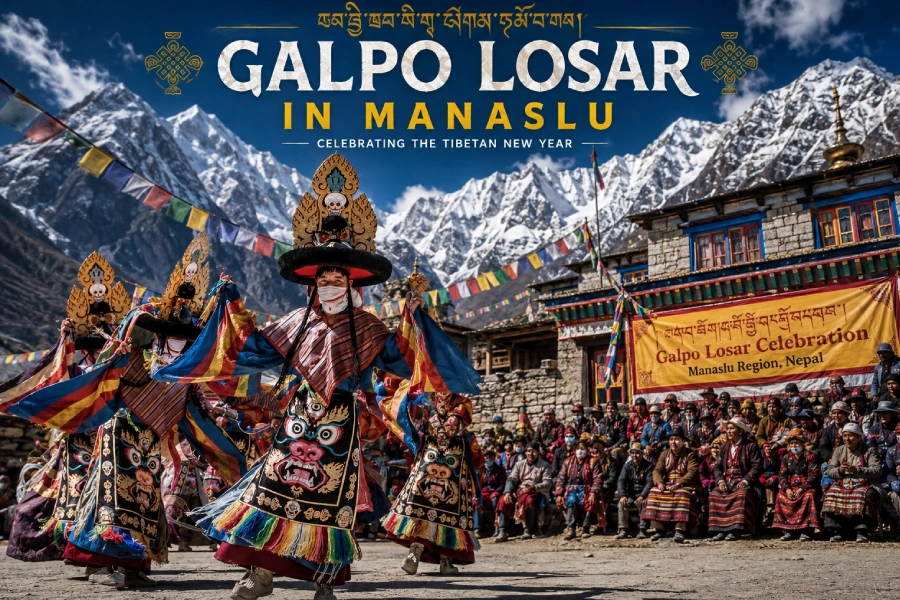
Nubri and Tibetan people in the upper valley
After you pass the place called Namrung, you will meet more Nubri people. History says their families came from Tibet a long time ago.If you analyze it, life here looks and feels more like Tibet.
You will notice people here speak differently. They also dress differently and follow Tibetan religious customs.
Houses are made of stone with flat roofs instead of wood. Farming rice or corn is hard at this height, so people raise yaks and grow barley instead. This is the way of their livelihood.
Likewise, most of the families here depend on trekkers for income too. Some run small lodges. Some work here as porters or guides.
Many families farm in one season and help trekkers in another season. Nubri people speak their own language. Their language is close to the Tibetan language.
But it’s not that they despise the Nepali language.
Most people speak Nepali too. Family life and customs here follow Tibetan ways more than Hindu ways.
Tibetan Buddhism and Religious Life in Manaslu
Once you pass the village of Lho, Tibetan Buddhism becomes part of everyday life. It is not just something people do at a temple. This entirely shapes how villages are built, how people start their day, and how they think about the mountains around them.
In this region, you will find:
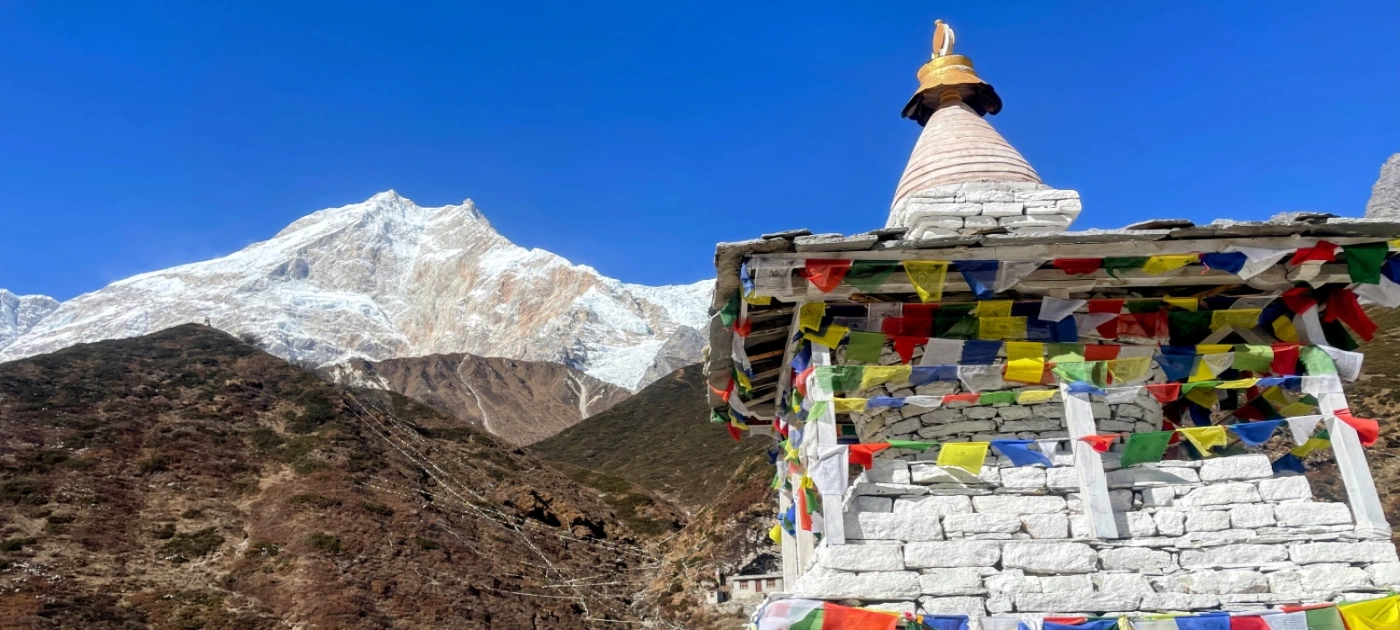
Prayer flags, mani walls, and stupas
You will see colorful prayer flags almost everywhere in the upper valley. They hang from roofs, bridges, and mountain passes. There is this belief that the wind carries the prayers when the flags move.
You will also see long stone walls called mani walls too. Mani Walls have the words "Om Mani Padme Hum" carved into them. It is a Buddhist prayer.
Trekkers should walk on the left side of these Mani walls, keeping the wall on their right hand.
In Manslu, you will see stupas, called chortens, too. These stone buildings mark the start of villages and mountain passes. People here believe that they protect travelers and bring good luck.
Prayer wheels are another common sight. Some are small and held in the hand. Others are built along the trail. Turning one is believed to send out a prayer.
You will see that many older villagers spin these wheels as they walk, almost without thinking about it.
Manaslu, the mountain, is more than just tall rock and ice to local people here. The origin of this name comes from an old word meaning "soul" or "mind."
Buddhist families here see the mountain as sacred. That is why you will notice that many stupas and temples face the mountain directly.
Monasteries worth a visit in the Manaslu Region
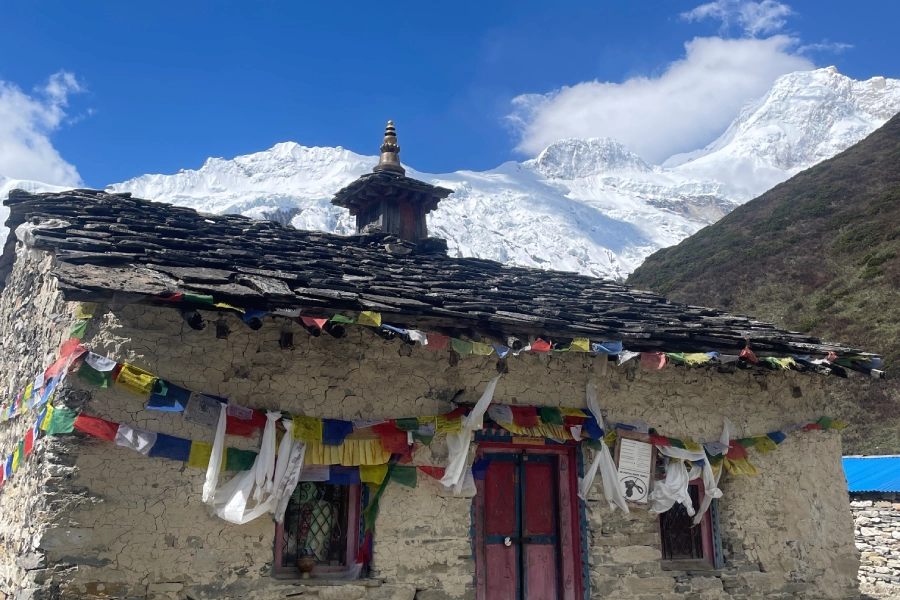
You will see a few monasteries along the trail. These monasteries will let you learn more about Buddhist life here:
Pungyen Gompa, near Sama Gaun, is situated high on the mountain. This Pungyen Gompa holds special meaning for local Buddhists.
Ribung Gompa, which is near Lho village, is easy to visit. Ribung Gompa is a good place to learn about monks' lives.
Serang Gompa and other smaller monasteries sit in nearby valleys. Monks or caretakers here usually look after them.
Visitors are welcome most of the time. But it is polite to ask your guide first, since some monasteries have quiet hours for prayer. Some monks also farm during the day. A calm visit in the middle of the day often works best if you want to visit the monasteries.
What are the villages along the Manaslu Trail?
Manaslu will take you to the different villages along the Manaslu Trail. Instead of thinking of the trek as one long path, think of it as a string of villages. Each one shows a new part of the story.
We have given some of the villages below for the Manaslu Trail:
Jagat and Philim: village life in lower Manaslu
Jagat is often the first village where the trail starts to feel different. You will see stone paths, homes close together, and a checkpoint where you show your permit.
Long ago, mule trains used these same stone paths to carry goods toward Tibet. Philim is a short walk further. It is a bigger Gurung village with fields on the hillside above it.
Most of the trekkers stop here for lunch or to sleep for the night. Both villages show simple farm life shaped by Gurung traditions.
Namrung and Lho: where the change happens
Namrung is situated right where Tibetan customs start to take over from the mixed Hindu-Buddhist villages below it.
This destination has a checkpoint and more stone buildings than the villages before it. The first thing that trekkers notice is that prayer flags are everywhere, not just here and there.
Lho is a little further along. It might be the most photographed village on the whole trek. Enjoy the nice monastery, a mani wall, and a clear view of Manaslu rising above the rooftops once you are here.
You can walk through Lho in twenty minutes, but most trekkers stay much longer just to look around.
Sama Gaun: home of Nubri traditions
Sama Gaun, which is also sometimes called Samagaon which feels like the heart of the upper valley. People here farm, raise yaks, and today welcome the trekkers too. The people living here are very heartwarming
Most trekkers here stay an extra day here to get used to the height before going higher. This village sits below Manaslu Base Camp. It is home to Pungyen Gompa and many small stupas and prayer flags too.
Life still follows the seasons, with barley harvests and many more. You will see the yaks moving between the grazing spots. On your extra day, you can hike toward the base camp or just sit and watch daily life go by.
Samdo: close to the Tibetan border
Samdo is the last big village before the Larkya La pass. This destination is close to Tibet, and trade between the two places has shaped this village for hundreds of years.
People here still follow Tibetan customs closely, and life has changed less here than almost anywhere else on the trek. Many families trace their history back to Tibetan traders who settled here long ago.
Some still have family living across the border. The Yak caravans still cross into Tibet during parts of the year. This keeps the old tradition alive.
After Samdo, the trail takes the trekkers fast towards the pass. This will definitely be your last calm look at daily Nubri life before moving towards the hard climb ahead.
Daily Life, Food, and Festivals in the Manaslu Circuit
The villages above all share something in common. That is, life here follows the seasons, farm work, and old traditions.
You can see this clearly in the food people eat and the festivals they celebrate.
Farming, yaks, and everyday routines
Life in Manaslu still follows the seasons closely. In the lower villages, families here plant and pick rice, corn, and millet on the hillsides.
As you go higher up, families grow barley and raise yaks as a way of life.
Trekking today at this destination provides a way of survival. This gives many families a second way to earn money, but farming and herding are still the main part of daily life. Some families make things by hand too.
In the upper valley, people still weave wool, make carpets, and carve wood. They learn these skills from their parents, not from a class.
You might see wool drying outside a home in Samdo or Sama Gaun. They are later used to make a blanket, a coat, or something to trade.
Houses and clothes
Houses look different as you climb highers the altitude in. You will see the upper villages have stone homes with flat roofs. This works better in cold and dry weather.
The flat roofs work well for drying crops or storing firewood too. The way of clothing changes too. Warm wool clothes, often in a Tibetan style, become more common the higher you go.
Food along the trail
The food changes as you climb higher, just like everything else. You will find many options, though:
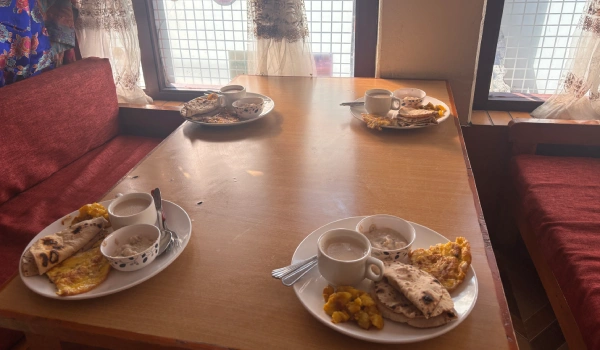
Dal bhat is rice, lentil soup, and vegetables. It is the main meal almost everywhere on the trek. It gives you enough energy and as many as refills you in the same amount.
Momos are small dumplings filled with vegetables or meat. You will find them at almost every stop, which is most of the choice for trekkers.
Thukpa is a warm noodle soup, great for cold, high villages.
Tsampa is roasted barley flour, often mixed with butter tea. It is a special food in the upper Tibetan-style villages.
Yak foods, like yak cheese, yak butter tea, and dried yak meat, become more common closer to Samdo.
Local drinks like chang and tongba are made from millet or barley. You will find them in some lower and middle villages, but it is smart to be careful with them while trekking at height.
The food is simple, but it fits the land it comes from. You can try local dishes instead of only ordering familiar food.
It is a fun way to explore and try new things when you are going on adventures.
If you want to know exactly what you'll eat and where you'll sleep each night, see our you can see our Manaslu Circuit Trek food and accommodation guide.
Lhosar and other festivals
Lhosar is the Tibetan New Year. It is the biggest celebration in the upper Manaslu villages. Families gather, cook special food, and visit the monastery.
Lhosar usually falls in February or March, but the exact date changes each year based on the Tibetan calendar.
You will also find smaller festivals happen throughout the year too. It is often tied to harvests or the local monastery's calendar.
Manaslu's Old Trade Story
Long before even trekking permits existed, the Manaslu valley was a busy trade path between Tibet and the lower parts of Nepal.
Traders used to bring salt, wool, and animals down from Tibet. They carried grain and other goods back up. Tibet had lots of salt but not much grain. Fortunately, Nepal's hills had grain but not much salt. This way trading helped both sides.
This kind of trade slowed down after the border became harder to cross in the middle of the last century.
Families in the upper valley had to depend more on farming, herding, and later on trekking. Even so, family ties across the border never fully went away.
This old trade story explains a lot about what you see at Manaslu today.
- It helps explain why Buddhism became so strong in Nubri and Samdo.
- It explains why houses, clothes, and language lean toward Tibetan style the higher you climb.
Many people in the upper valley still speak languages close to Tibetan, along with Nepali. The upper valley matters for more than its quiet, far-away feel.
Samdo and the land near Larkya La pass sat along old trade paths that linked Tibet to Nepal's hills. That history is part of what makes this part of the trek feel so different from the rest.
How to enjoy Manaslu traditions the Right Way?
The villages on this trek are real homes to real families. They are not just a nice spot for a photoshoot. In fact, a little preparation and it goes a long way toward making your visit memorable.
Manaslu is a special permit area; every trekker must hire a guide and trek with at least one other person.
This keeps trekkers safe on hard trails. It helps protect small communities living near a quiet border area too.
A good guide can help you understand local customs too. They can explain what is polite and what is not, right when you need to know.
Here are a few simple ways to be a good guest:
Stay in local teahouses.
Staying at local teahouses gives a benefit to know about the local cultures and traditions.
It puts your money right into the hands of local families.
Be kind to local people.
Respect works both ways. A simple greeting, some patience, and real interest in showing respect give a good outcome in the Manaslu Circuit.
Ask before taking photos of people.
This is very important at monasteries and during religious events. Not everyone wants their photo taken. So, you have to ask permission from the locals if you want to take photos.
Follow the rules at monasteries.
You have to follow the rules at Monasteries. Dress well and modestly.
Take off your shoes if asked. Stay quiet during prayers. Walk clockwise around mani walls and stupas. Do not touch religious objects without consent.
Buy from local shops.
You can buy snacks, tea, or small gifts from village shops. It really helps with the local economy.
Conclusion
Manaslu is famous for its mountain views, but that is not the whole story.
As you walk, you pass through real Himalayan villages that have farmed, traded, and prayed in this valley for many, many years. The way of life changes a lot from the lowland villages near Soti Khola to the high Tibetan-style villages of Sama Gaun and Samdo.
That change is just as much a part of the trek as the mountain views.
Gurung farming, Tibetan Buddhist practice, unique village buildings, seasonal food, and festivals like Lhosar all come together. It makes your Manaslu Trek more special.
Make sure you travel and enjoy with care. There are certain things you need to take care of, like asking before taking photos, staying in local lodges, and following the rules at monasteries. It is what turns a simple walk into a real and welcomed visit at Manaslu.
If you plan to trek the Manaslu Circuit, explore the villages like Lho, Sama Gaun, and Samdo.
Do not just pass through them for one night. These are the spots where the heart of the region truly lives. It deserves just as much of your attention as the mountain pass at the end.
FAQs About Manaslu Trek Traditions
What kind of traditions will I see on the Manaslu Trek?
Manaslu Circuit is a blend of Hindu, Gurung, Tamang, and Tibetan Buddhist ways of life.
It starts as mixed lowland customs near Soti Khola and changes into strong Tibetan customs by Sama Gaun and Samdo.
What groups of people live in Manaslu?
Gurung and Tamang families live in the lower and middle parts of the Manaslu trail. There are also Nubri people who live higher up.
Is Manaslu shaped by Tibetan traditions? Yes, most of all in the upper valley. Villages like Lho, Sama Gaun, and Samdo show strong Tibetan influence in religion, buildings, food, and clothing. This comes from many years of trade and families moving across the border.
Which monasteries can I visit?
Trekkers can visit Pungyen Gompa near Sama Gaun and Ribung Gompa near Lho. These are the two monasteries many trekkers visit. You will also find the smaller ones in side valleys too.
What food will I eat on the trek?
Dal bhat is the main meal almost everywhere in the Manslu circuit Trek. Momo and thukpa are easy to find too. As you go higher village, you will find tsampa and yak foods like butter tea and yak cheese too.
How can I be respectful of local customs?
You can ask the guide or the locals before taking photos of people or holy places. You have to walk on the left side of mani walls and stupas. Make sure you take off your shoes at monasteries if asked.
Is Tsum Valley part of the Manaslu Trek?
Tsum Valley is a separate valley which has its own permit and trail.
It branches off near Lokpa. Many trekkers add it to their Manaslu trip, as it has strong Tibetan Buddhist traditions worth seeing too.
When is the best time to see local festivals?
Lhosar, the biggest festival here at Manaslu Circuit Trek. This festival usually happens in February or March. If you trek in early spring, it gives you the best visibility.
Smaller village festivals can happen at other times too.