

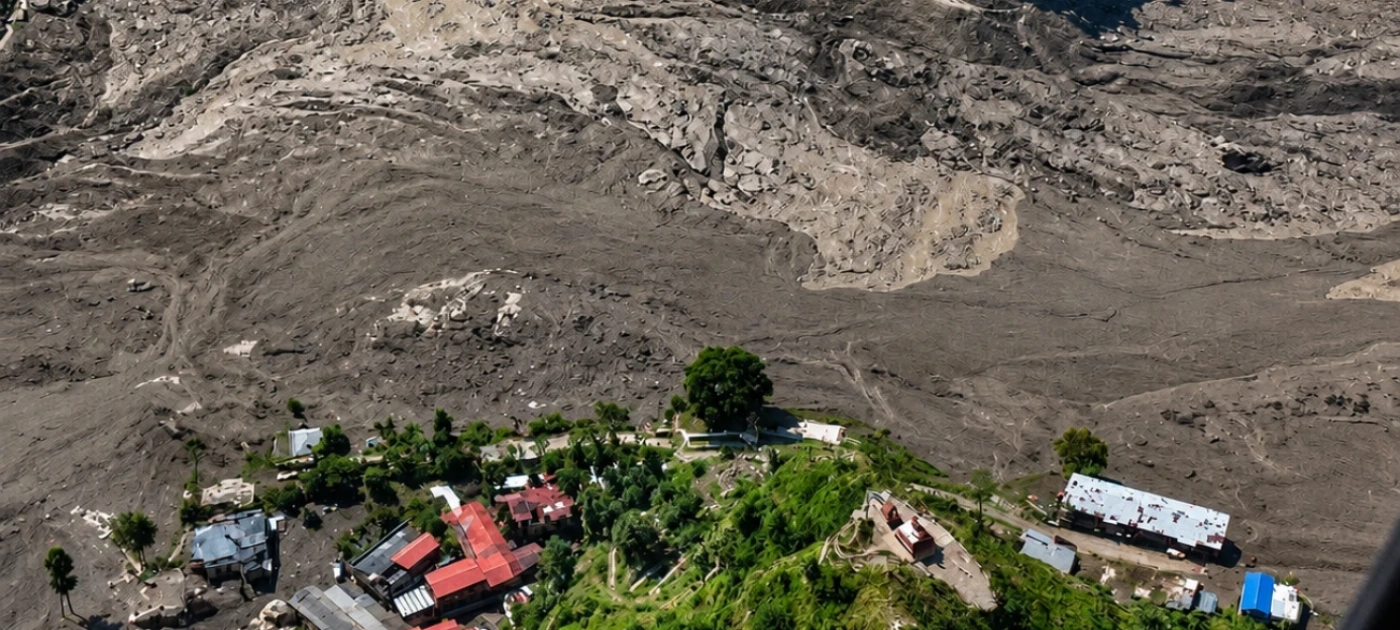

The devastating floods and landslides of late August 2026 have damaged Nepal's road networks in a very bad way. Rasuwa, Nuwakot, Dhading and along the Prithvi Highway are the major destinations affected in Nepal.
Today, we can see several roads and bridges have been washed away. The collapse of the Prithvi Highway at Krishnabhir has further interrupted the travel between Kathmandu, Pokhara and other major destinations.
Authorities and local administrations have opened several temporary alternative routes to trave. The everyday transportation, rescue operations and passenger movement is going on but definitely not in a smooth way.
However, these routes are not normal highway alternatives. Many are narrow, muddy or partially unpaved making it difficult to walk.
The travelers should expect delays and changing road conditions because of this major destruction.
Alternative Routes Available After the Nepal Floods
Kathmandu to Rasuwa and Dhunche
The regular road connecting Kathmandu with Rasuwa has been damaged by the Bhotekoshi flood. There are many more bridges and sections of roadway been destroyed. An alternative route has therefore been opened through the northern hills.
Alternative route looks like this :
Kathmandu → Tokha → Chhahare → Gadkhar Bridge → Aapre → Narja → Lachyang → Sarmathali → Patikharka → Bogtitar → Kalikasthan → Dhunche
This route has restored road connectivity to Dhunche. Dhunche is also the headquarter of Rasuwa.
At present, it is primarily being used by small four-wheel-drive and light vehicles.
However, travelers should be prepared for difficult conditions. The road is very narrow. Most of the sections remain unpaved and muddy after this massive flood.
Heavy traffic has also caused congestion, with even relief vehicles experiencing delays.
Travel advice: This is currently an emergency access route rather than a comfortable tourist road.
Note: You need to check the latest local road condition before traveling to Dhunche, Langtang or other destinations in Rasuwa.
Kathmandu to Hetauda
The collapse of the Prithvi Highway at Krishnabhir, Dhading, has affected the normal Kathmandu-Muglin corridor.
A section of around 70 metres has fallen into the Trishuli River. The another 120 metres has suffered serious cracking. As a result, vehicles traveling between Kathmandu and Hetauda are being diverted through alternative routes.
For smaller passenger vehicles, one designated route is:
Hetauda → Bhimphedi → Kulekhani → Sisneri → Dakshinkali → Kathmandu
For traffic traveling in the opposite direction:
Kathmandu → Pharping → Phakhel → Kulekhani → Bhimphedi → Hetauda
These routes are currently under significant pressure because of increased traffic following the Prithvi Highway closure.
Travel that would normally take around three hours can be longer because of overcrowd at its way .
Kathmandu to Pokhara
The traditional Kathmandu-Pokhara route through the Prithvi Highway is currently affected by the Krishnabhir collapse causing the disruption in travel..
Authorities are using alternative ways to maintain connection. One important alternative for traffic approaching from the Muglin side is:
Galchhi → Sunaulabazar → Dhadingbesi → Arughat → Gorkha Bazaar → Anbu Khaireni → Pokhara
This route has been designated as an alternative corridor following damage to roads and bridges that connects Dhadingbesi with the Prithvi Highway.
However, travelers should not expect the same journey time or road quality as the normal Prithvi Highway route. Some sections of the alternative roads require emergency maintenance and upgrading.
If you are planning a Kathmandu-Pokhara journey, check the road situation immediately before departure.
Kathmandu to Chitwan
Travel between Kathmandu and Chitwan/Bharatpur has also been affected because the usual route passes through the damaged Prithvi Highway corridor.
Alternative traffic management has been introduced through the Hetauda and Makwanpur side.
Vehicles may use:
Kathmandu → Dakshinkali/Sisneri → Kulekhani → Bhimphedi → Hetauda → Chitwan
Another alternative corridor being used for agricultural and local traffic connects the Thaha area through Simbhanjyang and Bhimphedi toward Hetauda. the vehicles can continue towards Bharatpur and other destinations.
Dhading to Gorkha, Chitwan and Pokhara
Dhading authorities have officially designated several temporary routes after floods damaged roads and bridges that connects Dhadingbesi with the Prithvi Highway.
One of the most important routes is:
Dhadingbesi → Taribesi → Salyantar → Arughat → Gorkha Bazaar → Anbu Khaireni → Chitwan/Pokhara
This route is intended to maintain transportation between Dhading and destinations including Gorkha, Chitwan and Pokhara.
Other temporary routes designated from Dhadingbesi include:
- Dhadingbesi → Sunaulabazar → Bhorle → Laskare → Koshikhola → Forsetar
- Dhadingbesi → Bhulbhule → Patle → Phakse → Syal Danda → Dandagaun → Koshikhola → Forsetar
- Perawatar → Adamtar → Belintar → Masatar
Some of these roads are still undergoing emergency maintenance. The certain sections require further upgrading and bridge work.
Alternative Route for Travelers Heading to Rasuwa
For travelers heading towards Dhunche, Langtang or northern Rasuwa, the most important temporary connection is currently the Tokha-Chhahare route.
Current route:
Kathmandu → Tokha → Chhahare → Gadkhar → Aapre → Narja → Lachyang → Sarmathali → Patikharka → Bogtitar → Kalikasthan → DhuncheThe route has helped reconnect Rasuwa with the national road network after the flood destroyed major bridges and road sections.
But this route needed to be approached with caution.
Small four-wheelers are currently more suitable because of the narrow roads, mud, landslides and traffic congestion can cause delays in the travel.
How safe is it to travel on these alternative routes?
Travel conditions remain unstable.
The alternative roads are being used because the main highways have been damaged.But many of these routes were not designed to handle the current volume of traffic.
Rain can quickly make unpaved sections muddy. The risk of landslides and falling debris remain a concern in mountainous areas.
The Department of roads and local authorities are continuing emergency repairs. It includes road clearance and the planned installation of Bailey bridges at important damaged locations.
Travelers should therefore be careful. They need to :
- Check the latest road condition before leaving.
- Avoid traveling during heavy rainfall whenever possible.
- Use smaller vehicles on narrow alternative roads.
- Allow extra travel time.
- Follow instructions from traffic police and local authorities.
- Avoid unnecessary travel to severely affected areas.
- Carry sufficient food, water and essential medicines during long journeys.
- Do not assume that a route reported as open will remain open after heavy rain.
-
What you need to know before visiting Nepal ?
Nepal's major tourist destinations are not all affected in the same way.
Some of the routes remain operational, while others are experiencing serious disruption. The biggest current problems are around Rasuwa, Nuwakot, Dhading and the Kathmandu-Muglin corridor.
The Krishnabhir collapse has also created an more pressure on routes through Makwanpur and Hetauda.
For international travelers those who are planning trips to Pokhara, Chitwan, Langtang, Rasuwa or other destinations, it is important to confirm the road condition immediately before starting the journey.
To know more about this disaster , you can go through Rasuwa flood alert 2026.
Conclusion
Nepal's road network is slowly reconnecting through temporary routes after the devastating 2026 floods.
From the Tokha-Chhahare route to Dhunche to the Dhadingbesi-Arughat-Anbu Khaireni corridor, the roads are currently helping maintain needed connections between affected districts and major destinations.
However, these are emergency alternatives but not permanent replacements for the damaged highways. Road conditions can change quickly during the monsoon. The climate change is unpredictable.
It is necessary that you should prioritize the latest official updates, safety and flexibility when planning journeys across Nepal.