

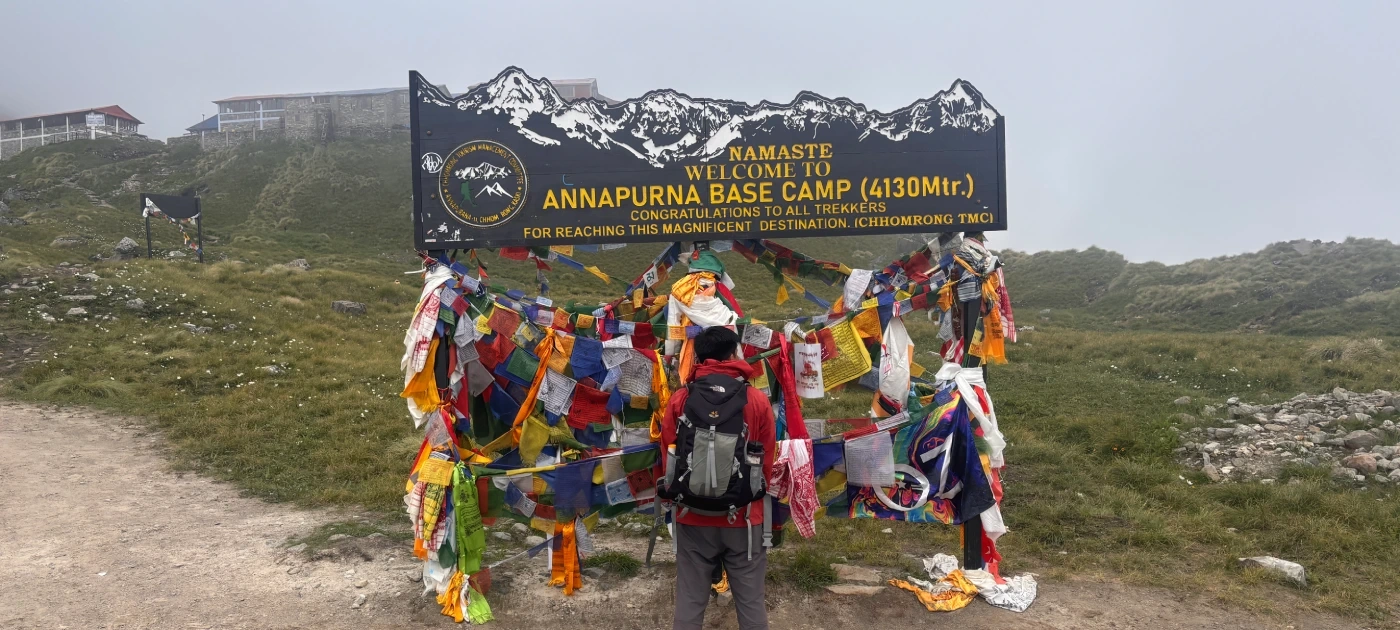
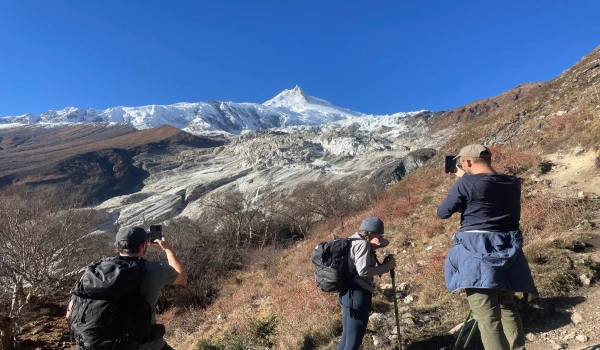
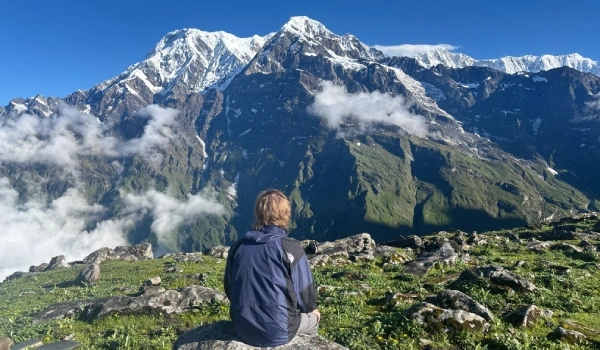

Best time to trek Annapurna depends on what your priorities are in this journey. With the ideal choice chosen, trekkers definitely gets the most rewarding experience of the Himalayas .
If you choose the right timeframe , you will get to see the clear views , safe trails, and warm days.
These days everything has been photographs and videos.
Our trekkers say they want to explore places and get captured in the best possible way.
Why ?
Because they want to save memories for their future self.
But, what if you choose the wrong timeframe, it will definitely lead you to the unclear scenes. We don’t think it is worth it. The truth is, "best time" depends on what you want. Do you want to see rhododendrons in full bloom?
Do you want the clearest mountain views?
Do you want fewer people on the trail? Do you want the lowest price?
Each goal you prefer points to a different month.
By the end of this guide, you will know which season fits your goals. You will know what to pack, what to expect, and how to stay safe at altitude.
Let’s see below what are the temperatures, crowd levels, festivals, and safety risks for every season too in the Annapurna Base Camp.
Annapurna Base Camp Trek climate zones
Annapurna circuit trek is a moderate trek. If you have good fitness then you are good to trek for this Annapurna Region .
Before this, you mainly have to understand how the climate is . You have to know what the temperature is. Is it adaptable to your body or not?
So, the Annapurna region is not just one climate. It has majorly three climate zones.
As you walk from Pokhara towards Annapurna Base Camp, you pass through a different world. Means, you will have to face several climatic weather changes.
Each one has its own weather pattern.
Check out below about the climatic pattern :
Lower zone (about 800-2,000 meters):
This area runs from Pokhara up through villages like Chhomrong. Well, it forms the initial section of the Annapurna trek. You will find warm and often humid conditions here.
The day time temperature often ranges in between mid 20s to mid 30s Celsius.
You pass through the terraced rice fields, flowing rivers including the Modi Khola and subtropical forests where there are lots of bamboo trees, oak trees , rhododendron trees.
Also , you get to watch the birds, monkeys and other wildlives.
This lower zone receives the heaviest rainfall during June-September , which can make trails muddy and increase leech activity in the forests.
However, you will have a lovely experience with pleasant shaded paths, lively village life. The gradual elevation gain also helps trekkers acclimatize before entering higher, cooler zones at lower zones.
Mid zone (about 2,000-3,500 meters):
Mid- zone is the middle section of the Annapurna Base Trek. It explores the areas like Chhomrong or Tadapani up through Bamboo, Dovan and Deurali around 3,230 m. However, the trail steepens as the valley narrows.
You will find mild days with comfortable hiking temperatures around 8-20°C.
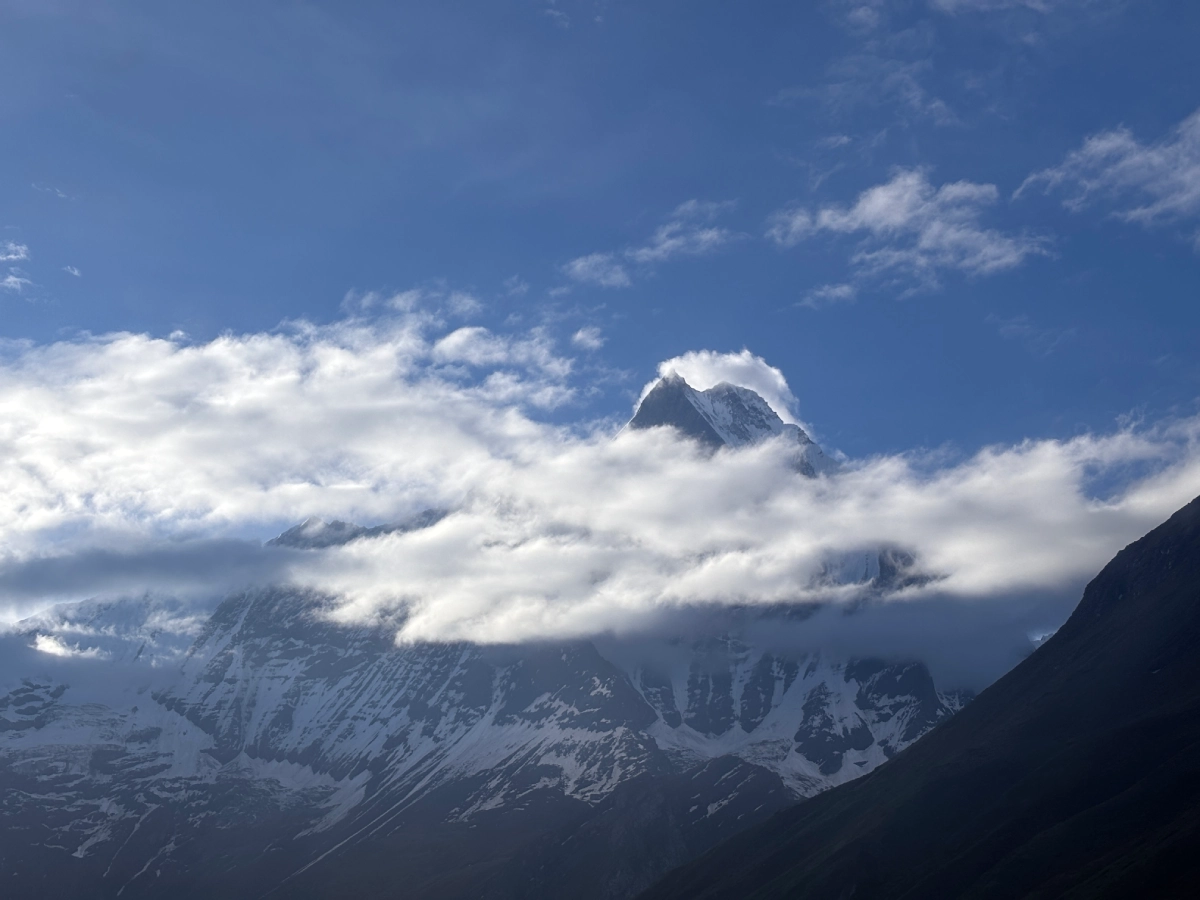
Now, the forests are more open . You will find rocky terrain and alpine meadows. The panoramic views of Annapurna South, Hiunchuli, and Machhapuchhre start getting closer.
You will see nature and wildlife like Himalayan Monal and many more.
Mid- zone is good for gradual acclimatization with scenic forest walking. Weather can change very quickly. Best is if you trek during spring and autumn.
High zone (Annapurna Base Camp at 4,130 meters, and Thorong La Pass at 5,416 meters):
The high zone begins after Deurali / MBC and includes the final push to Annapurna Base Camp (4,120m ) and the high pass Thorang La (5,416 ) on the Annapurna Circuit.
You will find thin, dry air with strong winds. Temperatures drop very quickly with altitude roughly 6°C cooler for every 1,000 m gained.
Likewise, snow can fall any month of the year. Days might start sunny but will turn cold and windy very fast. Nights are mostly freezing so get enough clothing for your own good.
This part requires good acclimatization due to altitude. Cold, dry air and wind will require proper layering and windproof gear. Pack for the highest point you’ll reach, not the starting temperature.
The views of the Annapurna massif looks splendid but brings harsher, more demanding conditions because of the altitude.
Best Seasons for Annapurna Base Camp ( Peak Seasons )
Most of the trekkers pick one of two seasons. Either spring or autumn
Check out why it is the best window out of the all seasons:
Spring in Annapurna (March to May)
The spring season at Annapurna adds colors on the trail. You will see the rhododendron forest with the shades of pink, red and white.
If you trek during mid-April , it is the peak. But at the same time, if you trek during late March, it feels quiet and fresh.
Daytime temperatures are mild here at Annapurna. Lower areas reach 16–25°C, while Annapurna Base Camp days are between 0°C and 10°C.
Likewise, nights at Base Camp can drop to around -5°C to -8°C in March, and warm up slightly by May.
The sky stays clear in the morning. Clouds may build up in the afternoon, most of all later in spring. No matter what, the visibility is completely clear during spring.
Spring works well not just for Annapurna Base Camp but for the full Circuit. Thorong La Pass becomes safer to cross as snow melts through March and into April.
By late March, the pass is usually open for trekkers.
This spring season draws more visitors too. Teahouses fill up fast, most of all in April. Prices for rooms and meals may run a bit higher too.
If you want this season, make sure you plan early and book ahead.
Autumn in Annapurna (September to November)
Autumn at Annapurna offers you clear skies and vibrant colours . The majestic mountain views reach the peak here. You will see the sharpest views , with little haze or cloud to block the peaks.
Days in autumn feel cool and pleasant. The temperature ranges between 15°C and 20°C in the mid zone.
Nights are often cold here. It drops to around -5°C at higher points.
During this time, rain becomes rare. This keeps trails dry and firm underfoot. You can easily walk here.
There are two biggest festivals to witness during autumn :
One is Dashain and another is Tihar.
Dashain runs from October 11 to October 21, 2026, with the main Tika day falling on October 21.
Tihar is celebrated just after Dashain.
This is the festival of lights, running from November 7 to November 11, 2026.
You get to take part in local life, see decorated homes, and share meals with welcoming hosts.
As said earlier, this season is also the busiest of the year for both Annapurna Base Camp and the Annapurna Circuit.
October brings the largest crowds. It is because of the clear skies and stable weather that can be adjusted by your body.
But if you want quieter trails yet still strong conditions, late November gives you a good balance.
Autumn is the safest time for crossing Thorong La Pass on the Annapurna Circuit route too.
Snow has not yet built up at this time , and weather stays balanced through most of this autumn season.
Off-Seasons for Annapurna Base Camp
Not everyone wants the busiest months. Some trekkers want quiet trails, lower prices, or a different kind of challenge.
So,for this winter and monsoon are the time to trek.
Winter in Annapurna (December to February)
Winter brings quiet trails and clear, cold air.
Days at lower elevation stay mild in winter. The temperature is between 5°C and 15°C. But during the night, the cold gets harsh, dropping below -10°C.
You can expect even colder conditions at Thorong La and similar other high points.
But, the ABC trail usually stays open during winter, though snow can build up near the top. The Annapurna Circuit tells a different story.
Thorong La Pass often closes for stretches in January and February.
This happens most if there is heavy snowfall.
Likewise, December gives better odds of a safe crossing than the deeper winter months.
If you are a trekker who wants a shorter winter trip . You can choose routes like Mardi Himal or Ghorepani Poon Hill instead of the full Circuit. These shorter treks stay lower and avoid the highest, riskiest points.
If you trek in winter, make sure you pack for a serious cold.
Bring a sleeping bag rated to -15°C or colder. Microspikes help on icy sections.
Note : Winter trekking suits experienced trekkers best. Pick a guide who knows current trail conditions.
Monsoon in Annapurna (June to August)
Monsoon turns the hills bright green than the other seasons. Forests look lush and beautiful. For trekkers who love rain and solitude, this season has its own beauty.
But keep in mind that beauty comes with real challenges.
Rain falls heavily below 3,000 meters, turning trails to mud. It makes it difficult to walk and move. Likewise, leeches appear in the wetter lower sections.
Landslides become a risk on steep slopes after heavy rain. Cloud cover often blocks mountain views for days at a time. This is definitely not the peak season for photographs.
Some areas sit in a rain shadow, meaning they receive far less rainfall than the rest of the region.
Upper Mustang and parts of Manang fall into this zone. Trekkers chasing a partial Circuit route sometimes choose these areas to avoid the worst of the rain.
Monsoon is the lowest-cost season to trek.
Trails sit empty so many teahouses lower their prices to attract guests.
This season fits bold, flexible trekkers who have experiences of the trail.
Note : If you trek in monsoon, don’t forget to pack a strong rain jacket, waterproof pack cover, and gaiters.
Anti-leech socks help too. Build extra buffer days into your schedule in case landslides block the trail.
Off-Season trekking tips for Annapurna Base Camp
Winter and season are the two major off seasons for Annapurna trek. But still, if you are willing to trek on this timeframe, we care for your safety.
Below we have given you fewer tips for your preparation :
For monsoon trekking:
- Make sure you pack a full rain jacket and waterproof pants.
- Use a waterproof cover or dry bags for your pack.
- Wear gaiters to keep mud and leeches off your lower legs. The trail gets very slippery.
- Carry anti-leech spray or salt for quick removal. This is the best technique.
Build a few buffer days into your plan in case of disasters . If landslides or floods are disrupted, your buffer days are your bonus points.
For winter trekking:
- Nights are very cold. Pack a sleeping bag rated for at least -15°C.
- Make sure you bring microspikes for icy sections near high points.
- Dress in layers. You can add or remove as temperatures shift.
- Stay alert for signs of avalanche risk on steep, snow-loaded slopes.
Check ahead with our guide or teahouse owners about which lodges stay open during winter.
General tips for any off-season trek:
- Check flight and road status before you start your journey . Weather can delay both.
- Use a weather app built for mountain regions, not just general forecasts.
- Travel with a licensed guide who knows the current trail and pass conditions.
- Month-by-Month Annapurna Base Camp Trek highlights for 2026/2027
- We have given you the list of major highlights on a month -wise basis. This is for your ease.
Check out below:
January:
January brings peak cold with dry conditions. It is the winter month at Annapurna Base Camp.
There is heavy snow potential with frequent snow at higher elevations like Deurali, MBC, ABC. Many teahouses are closed or with basic facilities only as it is one of the peak winter seasons.
The daytime temperature ranges from 3-8°C lower elevations or near or below 0°C at ABC. The nights ranges from -10°C to -19°C or lower at Annapurna Base Camp
There are very minimal trekkers but it offers you maximum solitude.
Caution : Do not trek in January without proper gear.
February:
Trekkers find good visibility of Annapurna range with panoramic mountain views.
As it is the Late Winter Season, the weather is slightly milder than January.
The snow & melting begins in February. Trekkers find snow-covered trails at higher altitudes, with gradual melting towards month end .
The daytime temperature ranges from 5–10°C lower elevations. Likewise, it ranges from 0–5°C at Annapurna Base Camp .
Similarly the temperature at nights ranges -8°C to -15°C at Annapurna Base Camp .
The environment is very peaceful as very few crowds arrive here before spring season starts.
Comparatively, February is better than January with more teahouses reopening.
Trekkers enjoy the beautiful snowy landscapes with crisp air during February.
March
Snow begins to melt, with reopening trails after winter closure during March.
It offers the early Spring Greenery especially in lower areas like Ghandruk . Everywhere looks fresh and green. Early blooming rhododendrons in forests near Tadapani and Chhomrong is a peak moment for photography .
Trekkers enjoy excellent visibility of Annapurna I (8,091m), Hiunchuli (6,441m), Machapuchare (6,997m) and other mountains in March. There are very few crowds and a quiet early-season atmosphere which creates peace.
Higher sections near Deurali and Machapuchare Base Camp still will have snow as a beautiful scenery to witness .
Daytime temperature ranges to 10–15°C in Chhomrong and nights at Annapurna Base Camp drops to -8°C or lower which is very cold.
Caution needed on icy patches at higher elevations at this time of the month. March brings clean but crisp air with windy conditions at higher altitudes. Trek if you are a professional.
Only fewer teahouses fully open compared to peak season . The environment is cozy but with limited services.
April
Like Spring, April has consistent stable weather offering excellent visibility.
Everywhere there are beautiful flowering rhododendrons in forests near Ghorepani, Tadapani, and Chhomrong.
Paths are dry, clean, and vibrant with floral scenery at the time of April .
The clear views of Machapuchare (6,997m) and Annapurna I (8,091m), especially in the mornings, look breath-takingly beautiful.
Daytime temperatures get around 18°C at Bamboo (2,310m) and 8°C at Annapurna Base Camp. Likewise, nights are around -5°C at ABC . The weather is more comfortable than March.
Most snow has melted in April making the higher sections easier compared to the other months.
All lodges and services are operational as April is one of the peak seasons.
The nights have possible strong winds at higher altitudes in the afternoon. Make sure you use enough layers.
Trails at Annapurna become busier as the month progresses. However , early mornings remain peaceful giving you the best views.
May:
The temperature is warmer during May. Days reach 20°C+ at Sinuwa and around 10°C at Annapurna Base Camp. Likewise, nights around -3°C at Annapurna Base Camp.
May offers longer daylight hours with extended sunlight reliable for longer trekking days. Flowers blooming at Dobhan and Deurali in higher elevations look beautiful.
Excellent early views of Annapurna South and Hiunchuli look splendid. Humidity rises, leading to afternoon fog and clouds. Try and make the most of your mornings.
Mostly dry because May is before the full monsoon.
The route in May has peaceful routes for trekkers.
June:
As it is the start of Monsoon . Trekkers find warm, humid weather with increasing rainfall and showers.
The daytime temperature is 15–22°C mid-elevations, 8–14°C at Annapurna Base Camp. Likewise, night temperature ranges around 0 to -3°C at Annapurna Base Camp.
Morning views are possible but afternoon clouds and fog are very common making the visibility unclear. Trails become wet and slippery making the way unfit to walk.
Leeches are very common in lower forested areas.
July:
June is the peak Monsoon that brings heavy daily rainfall, the wettest month with high humidity.
Trekkers find vibrant green forests, rice terraces, and powerful waterfalls in July.
The daytime temperature ranges from 10-18°C at Annapurna Base Camp. Likewise, nights 6-8°C at Annapurna Base Camp . Visibility in July is very poor with frequent low clouds, fog, and limited mountain views.
Trails are challenging with slippery muddy paths, stone steps, and landslide risk.
Leeches & Insects are enough to piss your mood especially in lower and mid sections of the trail.
Trekkers find very peaceful and empty trails but still trails are full of risk. July trek is suitable only for experienced trekkers comfortable with rain and difficult conditions.
August
This is the peak monsoon greenery with green landscapes . It has dense forests, blooming rhododendrons, wildflowers, and thriving terraced fields as a scenery.
August offers the dramatic waterfalls & rivers with a powerful force, swollen rivers at their peak due to heavy rainfall.
There are very low trekkers. It is why the trails are quiet, peaceful and can have a more intimate teahouse experience.
It has very mild temperatures with comfortable warmth at lower altitudes of 20–25°C. This is cooler and refreshing at higher elevations. August brings frequent clouds, mist, and rain. This creates moody, dramatic mountain views with occasional clear breaks .
September
Post-monsoon vegetation is at its peak where you will find greenery everywhere.
Waterfalls near Jhinu Danda, Bamboo, and other areas flow strongly due to recent monsoon rains. It looks beautiful.
September is significantly less crowded than October, offering peaceful and serene trails for trekkers .
Light rain is possible early in the month, but skies clear rapidly by mid-September where you can see excellent mountain visibility of Annapurna South (7,219m) , Hiunchuli(6,441m) , etc.
You will find warm days (18–22°C in places like Chhomrong) ideal for trekking . The daytime temperature is very pleasant where you can manage cooler nights.
Muddy trails in September dry very quickly. It offers you the best photogenic views without the dryness of late autumn.
The accommodation is quite easy as you will find enough teahouse access compared to peak season.
October
October has stable dry weather. It is consistently dry with minimal rainfall, giving the pathway for reliable trekking conditions throughout the month.
Blue skies and excellent visibility gives the best panoramic views of peaks like Annapurna I (8,091m), Machapuchare (6,997m), and others.
Trails remain clean, dust-free, and secure due to the dry climate in October. It has less risk of mud or landslides.
Ideal trekking temperatures
October offers daytime temperatures , 15–20°C at mid-elevations like Sinuwa, around and 10°C at Annapurna Base Camp with sunny days and chilly nights . It gets to -5°C at higher camps, perfect for active trekking at this month of the year.
Beauty in October is the lush green forests and beautiful scenery especially between Deurali and Machapuchare Base Camp .
October is the peak season. So, teahouses offer fresh, organic, and warm meals supported by the harvest season and high demand.
All teahouses, lodges, and services are open and well-stocked during peak season.
November
With the monsoon long gone, you get clear views of the panoramic mountains including Annapurna South (7,219m) and Gangapurna (7,455m) etc.
Trails in October are completely dry and crunchy, making trekkers walk effortlessly and safely with no mud.
The best spotlight of October is the magical sunrise and sunset views. Choose October for best photography. The scenery, clear silhouettes, and lightening makes it perfect for photography.
Cool daytime temperatures are 12–16°C at lower elevations like Ghandruk and with very cold nights it reaches to –10°C or lower at ABC . This gives trekkers the true high-mountain winter feel for those who enjoy colder conditions.
December
The weather is very cold as December is the start of the winter season.
Trekkers find Snow-covered at higher sections .There is fresh snow possible above 3,000m, creating scenic winter landscapes.
December brings very cold temperatures with daytime 5-12°C at lower elevation and gets around 0-5°C at ABC. The nights range from -8°C to -15°C at ABC.
It is fit for trekkers who enjoy peace and want a quiet experience.
There are dry trails with icy patches so caution is needed on snow/ice.
Only fewer lodges are open, especially as you go higher up.
| Month | Lower Zone (Day/Night) | Mid Zone (Day/Night) | ABC Temp (Day/Night) |
| January | 12–18°C / 2–8°C | 0–10°C / -5 to -10°C | 0 to -5°C / -15 to -20°C |
| February | 14–19°C / 3–9°C | 2–12°C / -3 to -8°C | 2 to -3°C / -10 to -15°C |
| March | 16–22°C / 6–12°C | 8–16°C / 0 to -5°C | 4 to 8°C / -8°C |
| April | 18–25°C / 8–14°C | 12–18°C / -2 to 4°C | 8 to 10°C / -4°C |
| May | 20–26°C / 10–16°C | 14–20°C / 0 to 5°C | 10 to 14°C / -2°C |
| June | 22–28°C / 14–18°C | 16–22°C / 5–10°C | Mild but cloudy |
| July | 24–30°C / 16–20°C | 18–22°C / 8–12°C | Cool, wet |
| August | 23–29°C / 16–19°C | 17–21°C / 7–11°C | Cool, wet |
| September | 20–26°C / 12–17°C | 14–20°C / 2–8°C | Improving |
| October | 18–24°C / 8–14°C | 12–18°C / -2 to 4°C | 5 to 8°C / -5°C |
| November | 15–22°C / 5–12°C | 10–16°C / -4 to 2°C | 3 to 6°C / -8°C |
| December | 13–19°C / 2–8°C | 5–12°C / -6 to 0°C |
0 to 4°C / -10°C |
Note: The above are the month based seasonal patterns. Real conditions shift year to year, so always check a current forecast close to your travel dates.
How Global Warming is changing popular treks in Nepal ?
The climate these days is slightly different then the previous days .The reason is definitely global warming.
Global warming is a condition caused due to human activities that amplify the natural greenhouse effect .
So, these days the most popular routes like Everest Base Camp, Annapurna Circuit, and Langtang are experiencing melting glaciers, shifting weather patterns, and unpredictable snowfall.
This has increased the risks of landslides and avalanches in an unpredictable way.
As temperatures rise, these once-reliable trekking trails are changing in ways that not only challenge adventurers but also have threatened the future of Nepal’s renowned mountain tourism industry.
Now, let’s see some of the popular months and its effects:
September
September used to be an easy switch from rainy monsoon to clear autumn.
But now it is a tricky transition month.
Early and mid-September often still has heavy rain and clouds that stay longer on the high mountains.
This creates muddy trails, poor views, and flight delays in various regions of Nepal.
However, late September can get better, but it is not as reliable as it used to be. It now works best for lower, easier walks.
October
Similarly, October used to be almost perfect with clear skies right away.
Now, the good weather for trekking starts 1-2 weeks later than in the past.
Early October can still have leftover monsoon clouds. But, once it clears, views become beautiful again.
November
November is still one of the best months, like in the past for Annapurna Region . Skies are mostly clear, trails are dry, and views are excellent.
Days feel comfortable . Nights are cold higher up.
It remains great for Everest and Annapurna treks, though there are comparatively more people now.
December
December used to be too cold and quiet for many trekkers . But, now it is becoming a regular part of the main trekking season.
Skies stay clear, trails are dry, and views are sharp with fewer clouds.
It is colder at night, but it offers peaceful trails, beautiful sunrises and sunsets, and fewer crowds.
This month is good for Everest and Annapurna if you don’t mind the cold.
About Spring
Spring used to have clear and predictable weather every year.
However, these days it is less reliable because of the warming climate.
March
March used to be a good time for high Himalayan treks.
Now late snowfall is more common and winter conditions last longer.
You will see snow stays on high passes and trails much longer than before. This makes walking slower . So,make sure you need warm winter gear.
Passes can stay closed late into the month.
Treks like Annapurna Circuit or Everest Three High Passes need extra planning and may need changes for moving forward .
April to May
April and May used to be almost perfect spring months with nice weather conditions . They are still generally good with beautiful views, but it is less flawless as before.
The weather can change suddenly with more ups and downs.
However, it is still a popular time, but trekkers must be prepared for surprises.
These changes show how spring trekking in Nepal is becoming less predictable than in the past years .
What does the data and field experience show for climate change at Annapurna ?
If you study the recent data you will find the following pattern on the climate change in Nepal :
Since the 1970s, the Himalayan region has warmed by approximately 1.5°C faster than the global average.
The melting glaciers in Nepal are influencing the flow of water into trekking valleys . It is decreasing the amount of long-term snow cover.
Extreme rainfall events are increasing every year. This has caused landslides and trail washouts,especially in the Annapurna Region.
Flight delays to mountain helicopter adventures have become more frequent. Make sure you have buffer days included.
You will find snow is now remaining longer during the spring season . The High passes like Thorong La and Larke Pass remain snow-covered into March or April.
The number of clear-sky days in October and November are slightly decreasing every year. So, perfect autumn visibility is no longer guaranteed.
Comparing Seasons for Annapurna Base Camp vs the Annapurna Circuit
Annapurna Base Camp and the Annapurna Circuit share some trail sections. But they are different in length, height, and risk.
So, the season affects each route differently. Check below how :
| Factor | Annapurna Base Camp | Annapurna Circuit |
| Best months | March-May, September–December | March-May, September-November |
| Highest point | 4,130 m | 5,416m (Thorong La Pass) |
| Winter access | Usually open, with snow near the top | Thorong La often closed mid-January to February |
| Monsoon access | Open, but wet and low visibility | Partial routes possible in rain-shadow areas |
| Trip length | 7-12 days | 14-21 days, depending on route |
| Risk level | Lower overall | Higher due to pass elevation and weather exposure |
ABC stays more forgiving compared to Annapurna Circuit trek. Its top point sits over 1,200 meters lower than Thorong La, so winter snow and storms cause fewer closures of the trail.
But Annapurna Circuit demands for more care around the pass.
Spring and autumn remain the safest windows for crossing Thorong La. Trekkers who add the Tilicho Lake side trip should plan for two to three extra days.
Note : Check trail conditions first, since this high-altitude side trip adds more cold and wind exposure.
What are the factors that influence your choice for Annapurna Trek ?
Season is not the only factor in your decision. There are other few things that adds additional fun to make clear choices for Annapurna Base Camp Trek:
Festivals:
Dashain and Tihar fall during autumn. It is one of the major festivals in Nepal. You will get to experience a different culture and tradition from yours.
Likewise, another festival is Holi. This is also the festival of colors which falls under spring . It adds extra fun if you trek in March or early-April trek.
Photography:
Spring gives you bright blooms and soft light. Autumn gives you the sharpest, clearest mountain views. Winter offers dramatic snow scenes for trekkers who do not mind the cold.
Monsoon adds more green colors on the trek. Every season you choose gives something unique for photography.
Budget:
If we have to compare Monsoon and winter with spring and autumn, the off season treks bring lower prices on rooms and meals.
Very less people pass through these months, so many teahouses offer discounts to draw guests in.
Health and safety:
Altitude risk shifts with season, as covered earlier.
Weather patterns are shifting over time too. Monsoon rains now start and end at slightly different times.
Snowfall timing at high elevation is shifting as well.
Solo trekkers should take extra care in off-season months.
Fewer trekkers and guides are on the trail. Be prepared that you will find very few safety options on the trail. For your safety, trek during the peak seasons.
Permits:
You will need an ACAP permit (Annapurna Conservation Area Permit) and a TIMS card for this trek. This holds true no matter the season.
Permit offices may keep shorter hours during off-peak months, though.
But you can contact Himalayan Spirit Adventure for your permits .
Best trek options for every travel goal not just Annapurna
Sometimes the easiest way to choose is to match your goal to a month.
We have given you a quick roadmap to peak your months.
| Your Goal | Best Months |
| Best scenery and clarity | October-November |
| Warm weather and colorful blooms | March-April |
| Fewest crowds | December-February or June-August |
| Lowest cost | June-August |
| Cultural experience | October–November |
| Photography | April or October |
| First trek to the Himalaya | April or October |
| Adventure and challenge (experienced trekkers) | Winter or monsoon |
If more than one goal matters to you, look for overlap.
April and October offer you a variety of goals. This is why these two months draw the most trekkers each year.
Conclusion
There is no single best month for trekking to Annapurna Base Camp . But spring brings color and mild days. Autumn brings clear skies and festivals. These two time frames work as the major windows to trek. It is also one of the most popular seasons among all.
Winter offers the quiet trails for trekkers for someone who does not mind the cold. Monsoon brings green hills at the discounted prices
But what matters most is matching the season to what you actually are seeking. You need to acknowledge your experience level, and your comfort and then choose your timing.
Once you know what you want from the trek, the right month becomes clear for you .
No matter which season calls you, plan ahead, pack smart, and respect the mountain's pace.
The Annapurna region rewards trekkers who come prepared for adventures like these.
FAQs
What is the best time for Annapurna Base Camp Trek?
The best time for Annapurna Base Camp is during spring (March to May) and autumn (September to November).
Trekkers find stable weather, clear skies and splendid mountain visibility. It has comfortable trekking conditions.
Many trekkers consider these the best timeframe for Annapurna Base Camp due to less rain, dry trails, and stunning views of peaks like Machhapuchhre (Fishtail), Annapurna South, and Annapurna I etc.
What makes spring (March–May) a great time for Annapurna Base Camp?
Spring brings pleasant temperatures of 10–20°C at higher altitudes. It has clear skies with occasional light showers. The vibrant rhododendron blooms, paints the forests red and looks beautiful.
Trails are dry and well-defined, making it one of the best times for Annapurna Base Camp for first-timers and everyone.
Why is autumn (September–November) considered one of the best times for Annapurna Base Camp?
Autumn is one of the peak seasons. It offers crisp, clear weather with excellent visibility. It also has low humidity, and stable conditions after the monsoon.
Temperatures range from 8-18°C at higher elevations, with beautiful fields and sharp Himalayan views.
It is often regarded as the peak best time for Annapurna Base Camp, ideal for photography, comfortable trekking , and very less weather problems .
Can I trek Annapurna Base Camp in winter (December–February)?
Yes, you can trek Annapurna Base Camp in winter. But, it is very cold with -10°C at higher altitudes (approx). There is possible snow above Deurali and Machhapuchhre Base Camp.
Teahouses may close, and trails can be icy. You can trek only if you are an experienced trekker known for cold conditions.
It is one of the off-seasons , so be careful if you plan on trekking in winter.
Is the monsoon season (June-August) suitable for Annapurna Base Camp Trek?
It is possible to trek during Monsoon. But it depends. You have to be well known about the alternative routes. Monsoon trekking is generally not recommended.
Heavy rain, slippery/muddy trails, leeches, landslides, and cloudy views reduces the enjoyment.
The landscape is lush and green with fewer crowds, but proper rain gear is much needed.
What should I pack depending on the best time for Annapurna Base Camp?
You can pack :
Spring/Autumn (best times): Layered clothing, rain jacket, sun protection, sturdy boots.
Winter: Extra warm layers, four-season sleeping bag, micro-spikes.
Monsoon: High-quality rain gear and leech protection.
How does altitude affect the best time for Annapurna Base Camp?
Altitude sickness risk, changing weather conditions is the main concern when you are at heights.
With a maximum elevation of 4,130 m at Annapurna Base Camp and only one night at high altitude, it has more probable chances of being in trouble.
However, spring and autumn give more predictable weather, making acclimatization easier . This is why we choose the peak seasons.
Is the Annapurna Base Camp Trek suitable for beginners during the best seasons?
Yes it is suitable for beginners during the best seasons.
The trek is rated moderate with 4- 7 hours of walking per day. If you have an average fitness level you can go for Annapurna Base Camp Trek.