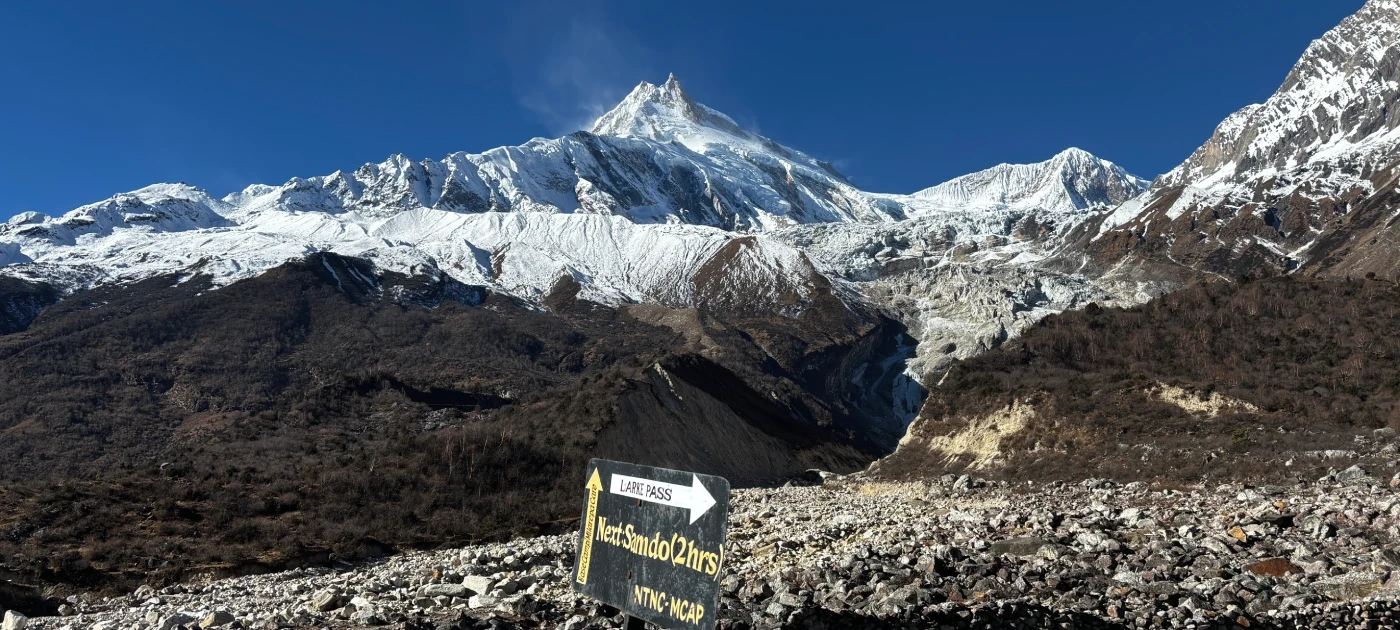

Solo treks in restricted areas have always been a bit tricky for solo travelers. The old rules said you needed at least two people in the group.
If you are traveling alone, you have to either find another trekker/group or buy a ghost permit, which means paying double for the restricted area permit.
Now, the rules have changed.
The Department of Immigration (DoI) has eased rules around solo trekking in restricted areas in Nepal.
And this change has made trekking in restricted areas, such as Manaslu, Upper Mustang, Kanchenjunga, Dolpo, and others, more flexible for solo travelers.
With this policy, the Nepal government is signaling how the country is adapting to a new generation of travelers who seek freedom, personalization, and deeper exploration.
Does this mean you can now trek completely alone in places like Manaslu and Upper Mustang?
Not exactly, and in this blog, we will share what the new restricted area rules are, how they impact solo trekkers, safety concerns, and some other useful information.
First, let’s learn a little about restricted areas in Nepal for foreigners....
What are the restricted areas in Nepal?
Before we share the new restricted areas policies, it is important that you know what the restricted areas in Nepal are, why they are restricted areas, and why adventurers love exploring these areas.
Nepal’s unique geography has played a major role in making mostly the upper northern part of the country a restricted area for foreigners.
The upper northern part of Nepal has the great Himalayas and also borders Tibet. Note that regions like Everest and Annapurna do not fall under the restricted area.
Initially, to maintain border security and uphold international border regulations, regions like Manalsu, Upper Dolpo, Kanchenjunga, Makalu, and Manaslu were made restricted areas in Nepal for non-Nepali travelers.
With time, the restricted area rules also safeguarded the fragile ecosystem, rare flora and fauna, and rich ingenious cultural heritage of the natives of these regions.
These parts of Nepal remain untouched by the rest of the world, and travelers cannot easily visit them due to expensive, restricted permits and strict regulations.
This had kept the regions as they were hundreds of years ago. Apart from Upper Dolpo, teahouses have been built on most restricted area trekking routes. However, the commercialization is not crazy like Everest and Annapurna.
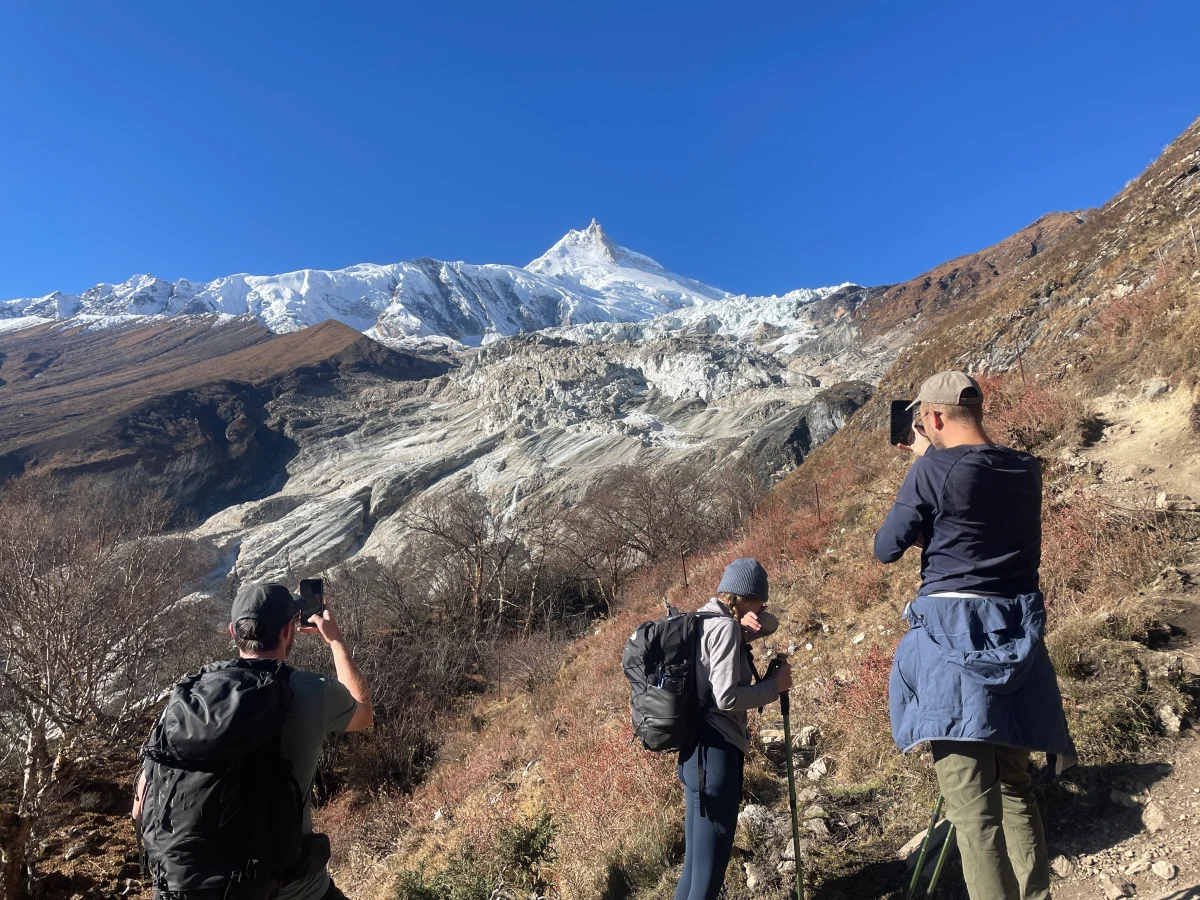
List of restricted areas in Nepal:
- Manaslu (including Tsum Valley)
- Upper Dolpo
- Lower Dolpo
- Upper Mustang
- Nar Phu Valley
- Humla (Simikot, Namkha, Changkheli)
- Makalu
- Taplejung (Kanchenjunga, Phantanglung, Mikwakhola, Sirijunga)
- Dolkha (Gaurishankhar, Bighu)
- Rasuwa (northern border regions of Thuman and Timure)
- Parts of Sankhuwasabha, Mugu, Darchula, and Bajhang
The old restricted area trekking rules
Before the recent changes, the restricted areas trekking rules had been like this:
➡ The trek must be organized by an authorized Nepali trekking company: One of the first rules of restricted area treks in Nepal is that any trip in the restricted area must be organized by a local Nepali trekking company like Himalayan Spirit Adventure. Only the authorized trekking companies like us can help obtain the restricted area permit. Not even an independent licensed Nepali guide can help you get the restricted area permits.
➡ Mandatory licensed Nepali guide: Tourists must be accompanied by a licensed Nepali trekking guide. It is compulsory. This rule ensured that the trekker gets immediate support in case of any emergency and has rich cultural interpretation and safe navigation.
➡ Minimum 2 trekkers required in the group: The minimum two trekkers requirement had limited traveling in the restricted areas of Nepal for solo travelers. They either have to join some other group, find another solo trekker to trek together, or buy a ghost permit.
A ghost permit means the trekker buys two restricted area permits, one in his name and another in someone else's name.
➡ Restricted Area Permit (RAP): The restricted area permit is a special permit that gives tourists access to untouched, border areas of Nepal. This permit is the most expensive type of trekking permit. For instance, a restricted area permit for Upper Mustang can cost up to USD 50 per day.
The NEW restricted area trekking rules
The new restricted area trekking rule has eased the minimum two-trekker requirement, and this small change has created a lot of buzz.
Now, solo trekkers can explore any restricted area in Nepal without needing to join another group, finding the second trekker, or purchasing a ghost permit.
*Note that this change doesn't mean that you can obtain the restricted area permits on your own or with the help of an independent Nepali guide. The remaining rules remain the same.
➡ The minimum group size is now 1
➡ The trek must be organized by a Nepali trekking company
➡ Only your Nepali trekking company can help you obtain the restricted area permit
➡ A Nepali licensed guide must accompany the trekker
➡ Porter is optional
Check out Kathmandu Post’s article on the new restricted area rule in Nepal.
Upper Mustang restricted area permit update 2026
Trekkers can buy a restricted area permit for Upper Mustang on a per-day basis.
Before, it cost USD 500 for the first ten days and USD 50 per person per day after that. So even if your trip is 7 days, you have to spend USD 500.
Now, you can purchase the Upper Mustang trek restricted area permit on a per-day basis. It allows you to pay only for the days you are in the region.
Trekking permit fees Nepal
Below, we have mentioned trekking permit fees of all restricted areas in Nepal along with other regions as well:
| Trekking region | Permit and fees |
| Manaslu |
➡ Restricted Area Permit (Manaslu RAP):
|
| Upper Mustang |
➡ Restricted Area Permit (Upper Mustang RAP): USD 50 per person per day ➡ Annapurna Conservation Area permit: NPR 3000 per pers |
| Upper Dolpo |
➡ Restricted Area Permit (Upper Dolpo RAP) cost: USD 500 per person for the first 10 days and USD 50 per day per person after the first 10 days ➡ Shey Phoksundo National Park permit cost: NPR 3000 per person |
| Lower Dolpo | ➡ Lower Dolpo Restricted Area Permit cost: USD 20 per person for the first week and USD 5 per person per day after that |
| Humla | ➡ Restricted Area Permit (Humla RAP) cost: USD 50 per person for the first week and USD 10 per person per day after that |
| Taplejung |
➡ Restricted Area Permit (Taplejung/Kanchenjunga RAP) cost: USD 20 per person for the first four weeks and USD 25 per person per week after that ➡ Kanchenjunga Conservation Area permit cost: NPR 2000 per person |
| Nar Phu Valley |
➡ Restricted Area Permit (Nar Phu RAP)
|
| Makalu region |
➡ Restricted Area Permit (Makalu RAP) cost: USD 20 per person for the first four weeks and USD 25 per person per week after that ➡ Makalu National Park and Conservation Area Permit: NPR 3000 per person Makalu Rural Municipality Permit cost: NPR 2000 per person |
| Bajhang | ➡ Restricted area permit: USD 90 per person for the first week and USD 15 per person per day after the first week |
| Mugu | ➡ Restricted area permit: USD 100 per person for the first week and USD 15 per person per day after the first week |
| Darchula | ➡ Restricted area permit: USD 90 per person for the first week and USD 15 per person per day after the first week |
| Everest |
➡ Khumbu Pasang Lhamu Rural Municipality permit: NPR 2000 per person ➡ Sagarmatha National Park permit cost: NPR 3000 per person *Jiri to Everest Base Camp trek permit cost: NPR 3000 per person |
| Annapurna |
➡ Annapurna Conservation Area Permit (ACAP) cost: NPR 3000 per person ➡ TIMS Card cost: NPR 2000 per person |
| Langtang |
➡ Langtang National Park permit cost: NPR 3000 per person ➡ TIMS Card cost: NPR 2000 per person *Note: For the Laurebina La Pass, you will also need a Shivapuri National Park permit, which costs NPR 3000 per person. |
Questions that will further clear your confusion and queries
Is solo trekking now fully allowed in restricted areas in Nepal?
Not entirely.
Only the minimum two trekker requirement has been eased. You still need an authorized Nepali trekking company and a licensed Nepali guide.
Are guides still required?
Yes, to trek in the restricted area in Nepal, a licensed Nepali guide is required. Foreigners are not allowed to enter restricted areas in Nepal without a Nepali guide.
Why did the Nepalese government ease the two trekker requirements for restricted areas?
This change was made to make trekking in restricted areas in Nepal flexible for solo travelers and to appeal to high-value adventurers.
This decision will also highly contribute to the post-pandemic tourism recovery.
Likewise, the increased footfall in less-visited regions will significantly support local communities, lodges, and other service providers.
Can this change jeopardize the safety of the trekkers?
No. It is because you will still be accompanied by a reliable, experienced mountain guide.
What does the minimum 2 trekker rule ease means for your next trek in Nepal?
This one rule change has opened new horizons for your adventure in Nepal. Along with the standard trekking routes, now gates to restricted regions have also opened for you.
Now, depending on your interest, fitness, and budget, you can trek in any part of the Himalayas in Nepal.
Final thoughts
As of 2026 (March 22, 2026, the minimum two trekker requirement for restricted areas in Nepal has been eased. Solo trekkers can do any restricted area trek.
Although the Nepalese government has made restricted areas open to solo trekkers, there are still other rules that travelers have to follow strictly.
You can trek solo, but your trip must be organized by a licensed Nepali trekking company, and you must be accompanied by a licensed Nepali guide.
Restricted trekking areas in Nepal have offbeat terrain and are very remote. You have to be fit and mountain smart to trek in these regions.
Balancing opportunities, adventure, and safety is a must. We are all excited about this change. At the same time, Himalayan Spirit Adventure is also ready to comprehensively support solo trekkers in the restricted areas in Nepal.
If you are a solo trekker and interested in exploring untouched, restricted areas in Nepal, book your trek with us. Our team will answer your questions and find the best restricted area trek for you as per your time, fitness, and budget.